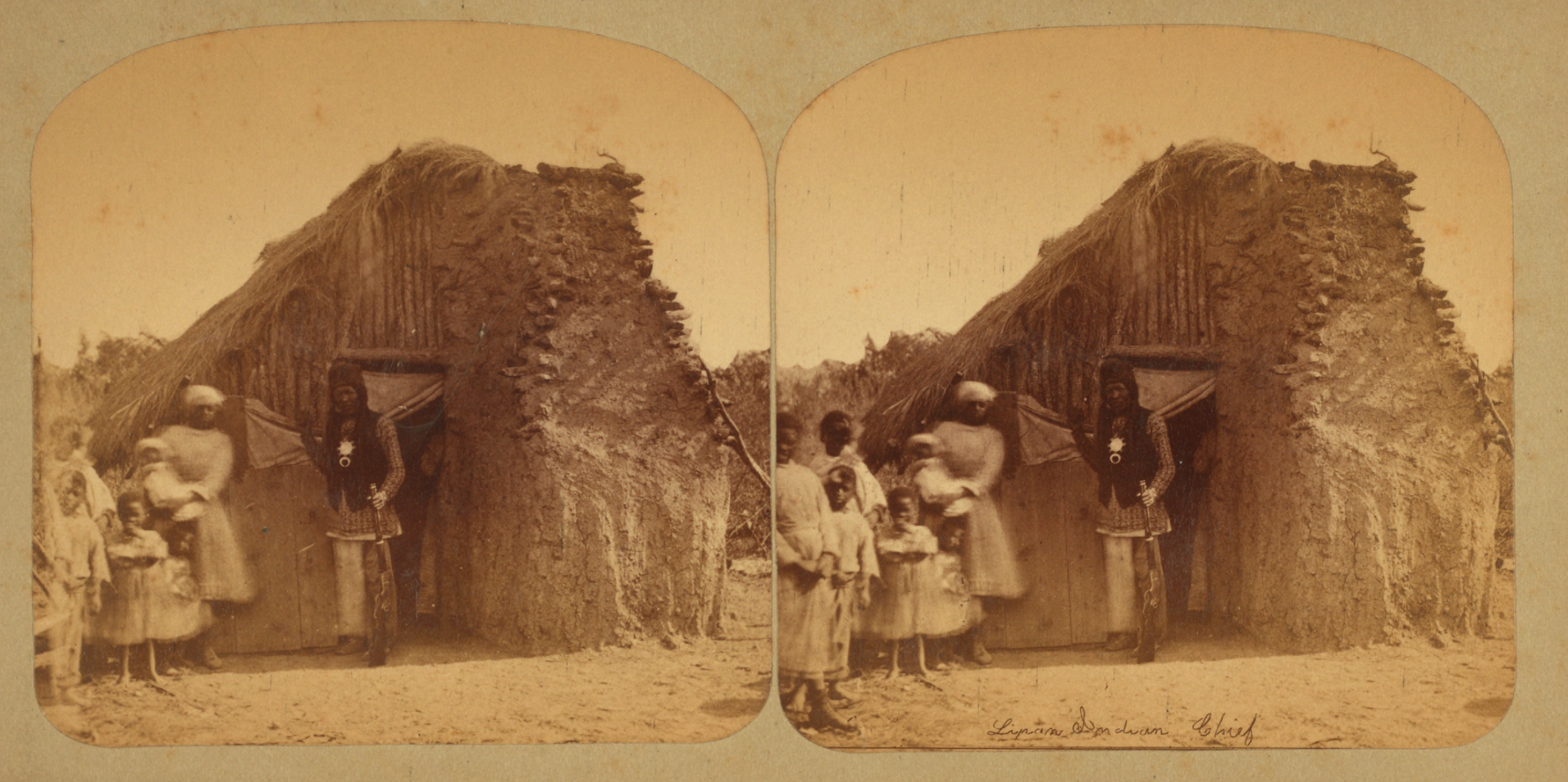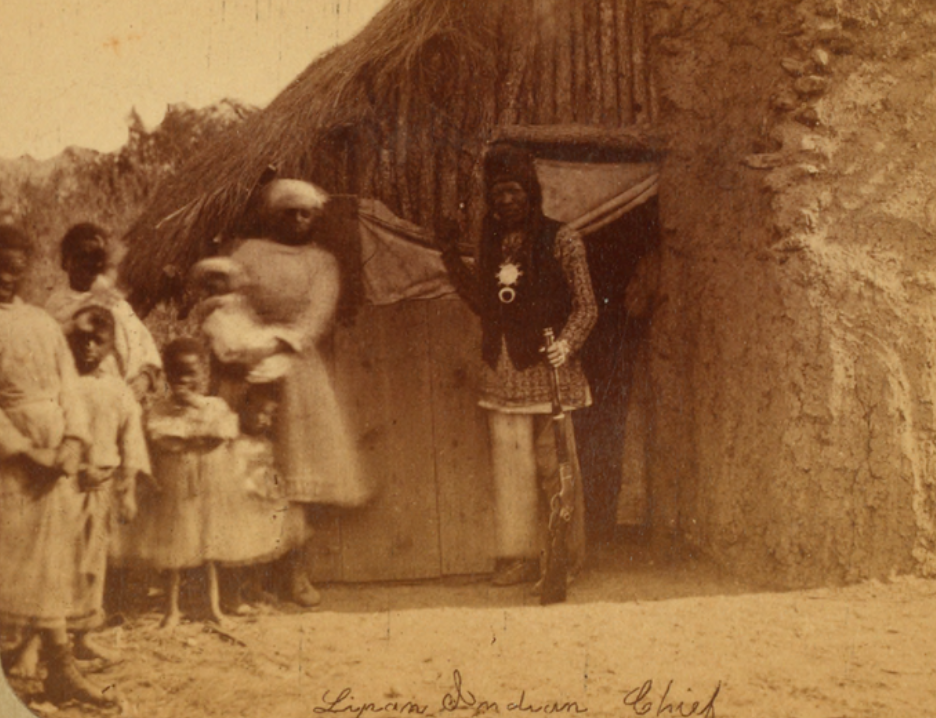
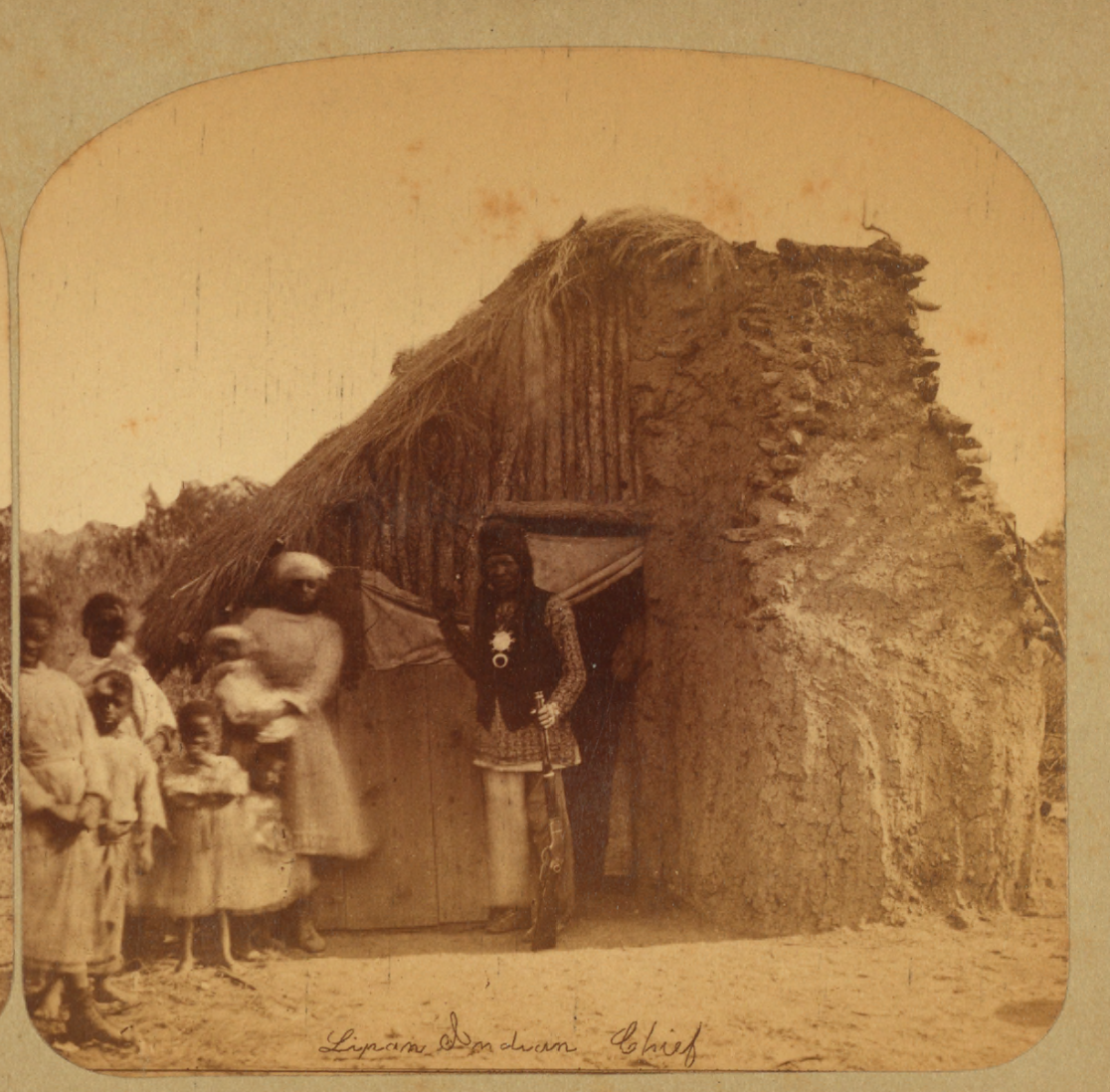
Photo: Indian Chief, Seminole Camp, with family, near Fort Clark, Tex (circa 1876-79) Seminole Indian Scout descendants hold regular renunions near Fort Clark in Bracketville Texas, as described in this article., From Wikimedia.
What I learned over this past weekend is that truly “the best laid plans are of mice and men” and that “everything always works out as it should.” Imagine planning an event for months, going over every detail numerous times, dotting all of those little Is and crossing all those big Ts, just to be reminded that the one thing you can’t control—the weather, which has never been an issue before because it’s also 1,000 degrees in June—becomes the biggest factor in whether or not your event will now happen. That’s exactly what happened on Saturday, June 20, the day that the Seminole Indian Scouts Cemetery Association (SISCA) celebrated Juneteenth.
Before the parade began at 10, a group of us tried to ride out to the Seminole Camp and learned that the roads to the Camp had been closed as a precautionary measure because of the rain. Where was the Treaty of Kódeeslí’í ceremony, that was scheduled to take place at 3, going to be held? For the next several hours, we made calls and made several attempts to find a second location. Finally, someone said, “What about the front of the fort?” And after speaking with Sherri at the security gate, new arrangements had been made and announcements were posted on Facebook and made at the Carver School. In the midst of all this though, we continued celebrating this special holiday.
This year, our parade marshal was Ms. Jo Ann Harris, who lives in San Antonio and who just turned 80 in May. She arrived dressed in a beautiful yellow and white floral outfit. Ms. Harris rode on the Tiny Town float. The parade also included members from the VFW, the Lipan Apache Band of Texas Cuelcahen Ndé, the Lipan Apache Tribe of Brackettville, Texas, who sang traditional Lipan Apache songs while they walked, Rocky Aguirre and his family on horses, Mr. Earwood and his family in his antique car, and Mrs. York and Maria Hidalgo and Blue in a golf cart. I walked with members of the Best family, who held our Juneteenth banner.
After the parade, we gathered at the Carver School, where our program took place. After an opening prayer by Sterling “Smiley” Goodloe, we sang the Black National Anthem —“Life Every Voice and Sing,” which was led by Dr. Kevin Johnson, who is from Houston and who has volunteered at Juneteenth and Seminole Days for the past several years. Afterward, we discussed the history of Juneteenth and spotlighted Opal Lee, the Grandmother of Juneteenth, who will be turning 100 this year. Following our program, Gabriel Sanchez taught a quick Afro-Seminole Creole lesson. And then the parade winners were announced and Augusta Pines presented Mark Mallory, a PhD candidate at Texas A&M, with a portrait of the Seminole Negro Indian Scouts in honor of the work that he has done to help SISCA.
Right at noon, we began our BBQ plate sale. The brisket and sausage were cooked by Frank Valenzuela, who owns Uvalde-based Game Tyme BBQ, and David Stautzenberger made the chicken. Augusta Pines made the rice. Corina Torralba made the beans, while yours truly made the potato salad (with a lot of help from Corina Torralba, David Stautzenberger, and Anita Anaya).
Following the BBQ plate sale, we prepared for the treaty ceremony. As we drove from the Carver School to the Fort, I couldn’t help but think about all the time that had been devoted by Mark Mallory, SISCA, La Casa of the Black Seminole Diaspora, the Lipan Apache Band of Texas Cuelcahen Ndé, and the Lipan Apache Tribe of Brackettville, Texas, to the writing of this treaty. The first and most important criteria was that it should be written and edited by someone from each group. It was important that everyone collaborated and felt free to add, delete, or change any words or phrases.
The ceremony that followed was beautiful and deeply moving. Gabriel Sanchez read the treaty. Hearing the words being spoken out loud made me deeply emotional. The months and months of planning had finally culminated in the event taking place, and it was more moving than I could have ever expected. After Gabriel read the treaty, one representative from each group signed it and then gifts were exchanged. Andrew Austin and his family performed a traditional Lipan Apache song. Then we heard comments from a representative from each group. Richard Gonzalez spoke on behalf of the Lipan Apache Band of Texas Cuelcahen Ndé, Augusta Pines spoke on behalf of SISCA, Corina Torralba spoke on behalf of La Casa of the Black Seminole Diaspora, and Jason Davalos spoke on behalf of the Lipan Apache Tribe of Brackettville, Texas.
Gage Brown spoke passionately about the history and significance of Las Moras Springs.
We sang this “Little Light of Mine.” And then Andrew and his family performed two more Lipan Apache songs while members of the audience danced.
The forecasted rain didn’t appear until after the ceremony. We had time to pack everything up and go back to the school where we were able to reflect on the day. We always say that every Juneteenth is special. And each one truly is. This Juneteenth, this 2026 Juneteenth, was special because of the treaty, because we are not just acknowledging our freedom, but exercising it.