
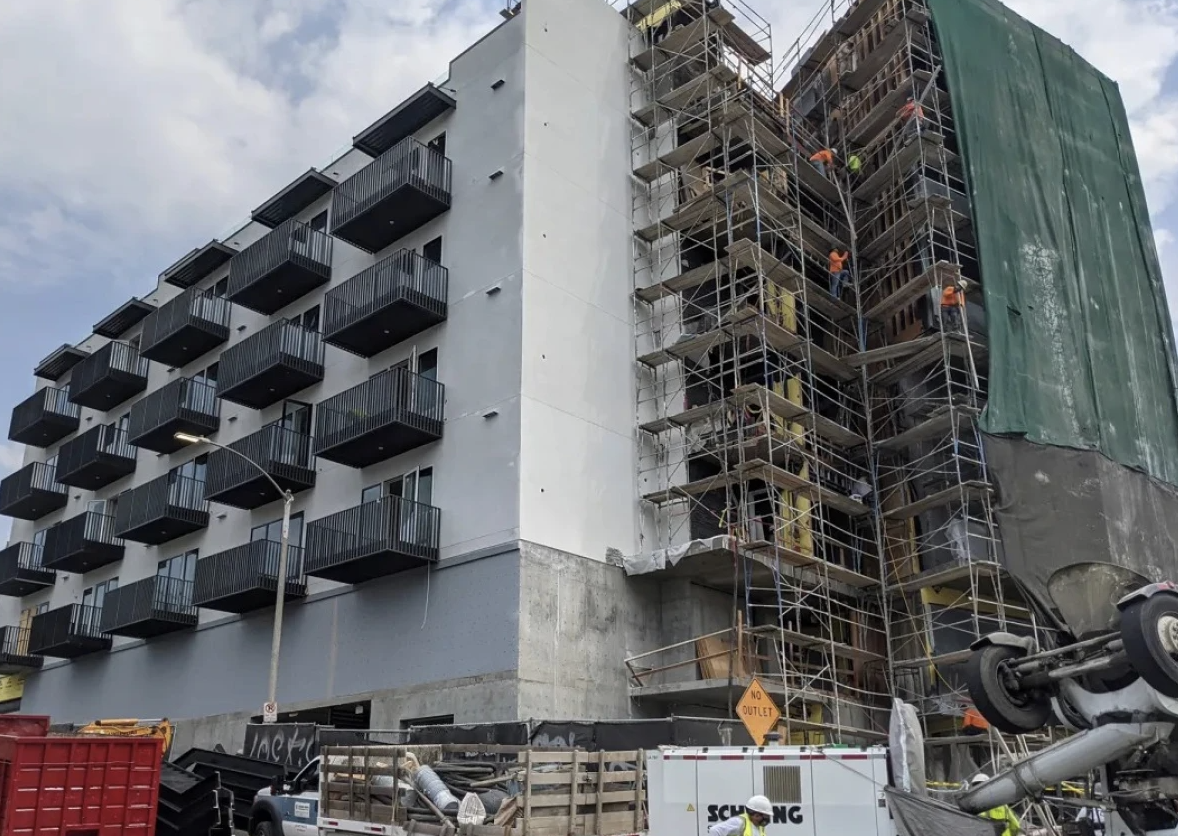
Photo: Damian Dovarganes
By Julian Travis Do, Co-Direct of ACoM and Contributor to Indian Voices
A dedicated $200 million carve-out specifically for a Tribal Housing Program is on the table in Proposition 1, a historic $11.25 billion state bond designed to tackle California's housing crisis. This massive fund could potentially be a game changer—not just for funding and building homes, but as a catalyst for a new era of Indigenous industrial sovereignty.
Proposition 1 is on the ballot for this Tuesday, November 3.
The Promise of Sovereign Steel
For decades, housing development on tribal lands has meant navigating complex federal bureaucracies and relying on external contractors, supply chains, and labor pools. The $200 million allocation in Proposition 1 offers a chance to rewrite that formula.
Housing development generally rests on three legs: land ownership, financing, and construction. Because California tribes already possess the land, and Proposition 1 could soon provide the financing, the missing piece is construction—which has traditionally been outsourced to general contractors.
This time, instead of just paying outside construction firms to build houses, tribes have the opportunity to invest in off-site, industrialized construction facilities. By building code-compliant, volumetric modular housing in high-tech tribal factories, Native communities can take absolute control over their own housing supply chains.
Producers, Not Just Consumers
This development has a built-in multiplier effect that creates an ecosystem of economic empowerment. It provides tribes with the sovereignty of owning manufacturing hubs located directly on sovereign land, creating thousands of highly skilled, high-paying jobs for tribal residents, particularly the next generation.
Tribes do not have to accept the old, slow methods of conventional construction. By adopting modern manufacturing models that build climate-resilient, culturally appropriate, high-quality homes for elders and families, tribes transform themselves into active producers of next-generation infrastructure.
Crucially, this vision would attract Native talent, locally and nationwide, who see this as an opportunity to return, contribute, and be part of a long-awaited aspiration.
A Foundation for the Future
Proposition 1 is more than a housing bond; it is an invitation to build a self-reliant future. If voters approve this measure on November 3, the $200 million Tribal Housing Program will provide the vital capital needed to bring the vision of Sovereign Steel to life.
By building their own factories, California Indian Country doesn't just earn a seat at the table anymore—they can build the table itself.
Julian Travis Do is Co-Director of American Community Media, which hosted an October 13 statewide briefing on Proposition 1. He focuses on public policy and industrial capacity.


