

On a sunny day in San Diego’s North County, a group assembled at Pala Rez Radio.
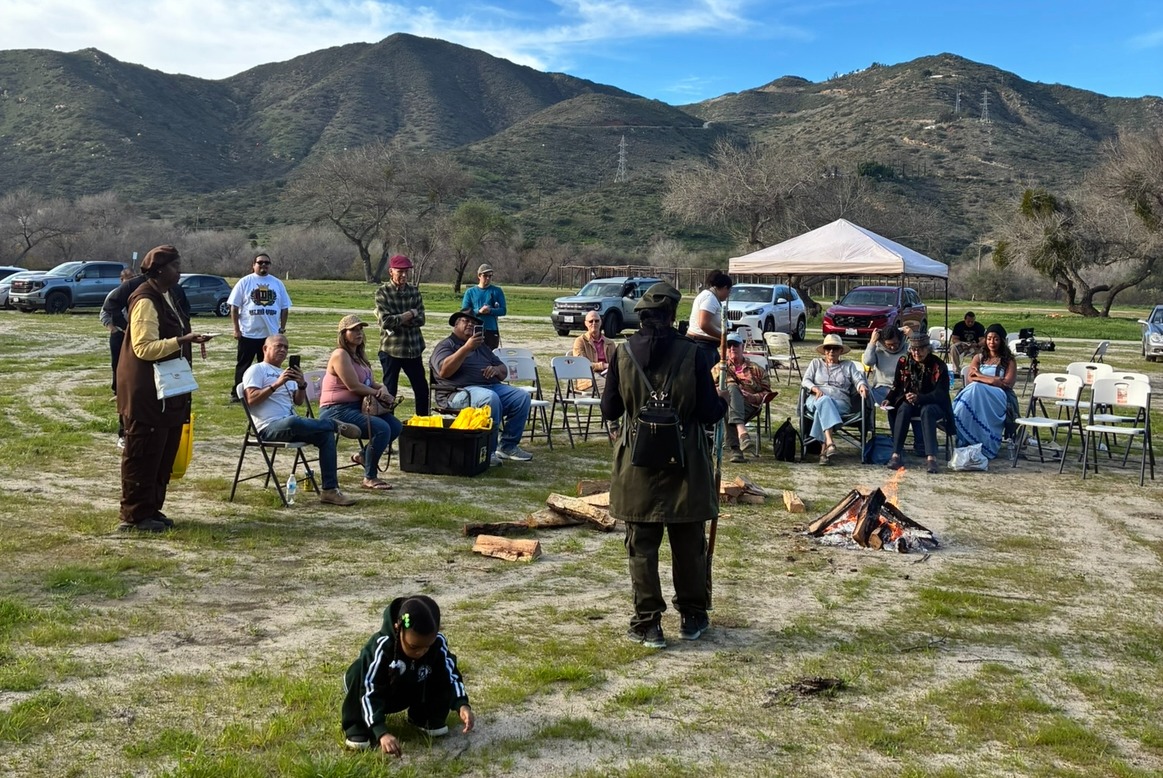
The January 27 event, titled “Indigenous Wisdom Through Media Heals Humanity
and Turtle Island,” assembled more than 30 Indigenous journalists, community members and
activists at the radio station. Hosting was Eric Ortega, operations assistant at Rez Radio, and
Rose Davis, president of Indian Voices. The aim of the event was to foster dialogue. And they
knew how best to do this in a culturally aligned way. When the time came to open discussion, the
group moved outside, unfolded chairs and formed a circle — a talking circle, conducted in the
Indigenous way. No moderator, no hierarchy. An object passed from hand to hand; whoever held
it spoke, while everyone else listened.
Early in the gathering, journalist Gerardo Cota, a friend of Indian Voices, broke the ice by
sharing openly about his own immigration experience, a story of trauma and vulnerability that
set the tone for what followed. Nearly everyone present shared something. Indigenous
communities have long understood storytelling as a form of record-keeping; the question this
event raised is why those stories so rarely appear in official data.
Agencies like the FBI publish annual hate crime statistics that include a category for
Anti–American Indian or Alaska Native bias. On paper, the data exists, but in practice, it is
incomplete. Reporting a hate crime requires trusting the institution receiving the report, and for
many Indigenous people, that trust does not exist.
"Why would we trust the government after the way we've been treated by them?" said Indian
Voices reporter Clarence Gonzales, pointing to how generations of violence, forced
displacement and legal erasure of Indigenous people have shaped how they perceive institutions
today. Underreporting follows directly from that history.
This gap is acknowledged at the state level. Kevin Kish, director of the California Civil Rights
Department, put it directly in an interview with Indian Voices after the event: "We very rarely see
official reports or data about hate in Native American communities … We know that's not
because it isn't happening. We know that's because people aren't reporting."
What is visible in official systems, he added, is only a fraction of what is actually experienced.
Available data suggests the scale of what's missing.
The 2024 California Department of Justice Hate Crime Report shows an increasing trend in
recorded hate crimes against Native people, though the department itself acknowledges the
challenge of working with incomplete data.
The Bureau of Indian Affairs has reported that rates of violence on some reservation areas can
reach ten times the national average. At the same time, research on violence against Native
women in urban areas — where a significant share of the population lives — remains limited.
Between 2021 and 2023 alone, the FBI documented over 25,000 violent crime incidents against
Native women. Meanwhile, the National Institute of Justice has found that fewer than half of
violent victimizations against women are reported to police.
The pattern is consistent historically: When incidents go unrecorded, needs go unseen and
therefore unmet.
Survey data from the statewide hate incident and crime reporting campaign California vs Hate
underscores the consequence: 44% of American Indian and Alaska Native respondents reported
unmet needs — compared to 42% among Black or African American residents, 41% among
adults with disabilities and 50% among adults with unstable housing. Women were more likely
than men to report unmet needs, at 37% compared to 25%.
“We see Native people having very elevated rates reporting unmet needs,” said Kish, pointing to
geography as a compounding factor: "People far from urban centers often experience elevated
rates of unmet needs … in a range of areas, including this one."
The data and the testimony converge: both underreporting and lack of access are shaping what
support people actually receive.
San Diego County is home to roughly 58,000 American Indian and Alaska Native residents
across 18 federally recognized tribes. The communities and their stories are present. What is
missing is a data infrastructure capable of capturing them.
Talking circles function very differently from government data collection by design. They
operate as a verbal sharing without interruption, without hierarchy, in relation to trusted others.
In the absence of institutional trust, this becomes a powerful method of truth-sharing and, for
many participants, a form of collective processing. It is not a replacement for formal reporting,
but it reveals clearly that something formal reporting cannot provide is being sought.
This gap is also structural.
As Kish explained, "The biggest structural barrier is the lack of services in a lot of places in the
state."
California vs Hate was developed in part as a response to that problem.
The statewide, non-emergency hotline and online portal — created after hate crimes in California
rose more than 50% between 2020 and 2024 — is run by the California Civil Rights Department
in partnership with 211 and community-based organizations. It operates separately from law
enforcement and allows for anonymous, confidential reporting in 15 languages, with support
available in more than 200.
Reports can be made online at any time or by phone at (833) 866-4283, Monday through Friday,
9 a.m. to 6 p.m. PT.
Since launching in May 2023, the hotline has responded to more than 6,800 requests for help,
including non-hate incidents, showing both the scale of need and the demand for alternatives.
A recent case illustrates what can happen when incidents are reported.
In January 2026, the California Civil Rights Department announced a settlement with a car
dealership after a Native American customer experienced discrimination. A staff member,
believing a call had ended, made a remark about the customer paying "n skins and feathers."
The settlement required updated complaint policies, staff training on civil rights protections and
engagement with a local tribal museum.
Kish described the Ca vs Hate approach in terms that echo the talking circle: "It's not a law enforcement line … It is intended to give people connections and resources, to services that they
identify as needing." The job of the hotline, he said, is essentially "to listen… and then match
what the person says they need with available services."
When Indigenous communities are not seen in official data, it does not mean they are absent; it
means the method of communication is not reaching them. Talking circles are one way
communities are already building their own record. The hope is that by holding more of them —
and by connecting communities to resources like California vs Hate that are designed to listen,
the gap between lived experience and official record can close.
Kish also sees a role for media in uncovering hate crimes and incidents: "ournalists and media
should cover it … there aren't a lot of people doing that work."
At the same time, he continued, how these stories are framed matters, as “we can end up… creating a norm that the problem is okay.”
The challenge is to report clearly without normalizing harm, especially given that “the vast
majority of people do not want these events to be happening,” he added. “When a hate incident
happens, it can really derail a person’s life… you don’t have to deal with what happened to you
alone.”
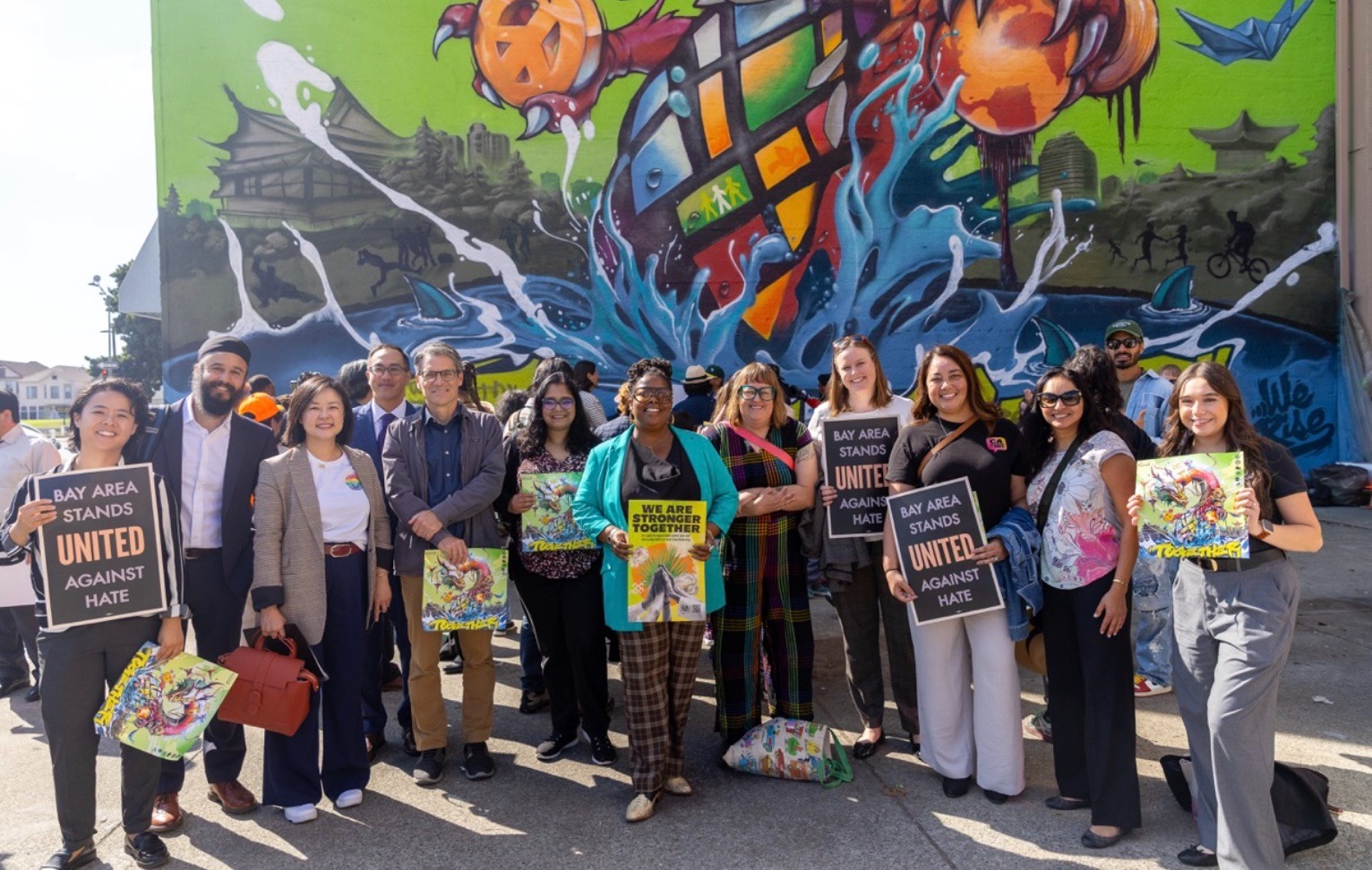
Photo provided by CA Vs. Hate
Get Support After Hate:
California vs Hate is a non-emergency, multilingual hotline and online portal offering
confidential support for hate crimes and incidents. Victims and witnesses can get help
anonymously by calling 833-8-NO-HATE (833-866-4283), Monday to Friday, 9 a.m.–6 p.m. PT,
or online at any time. Anonymous. Confidential. No Police. No ICE.
This story was produced in collaboration with California vs Hate. Join them for the first-ever CA
Civil Rights Summit on May 11, 2026. Register and find more information at
www.cavshate.org/summit.


