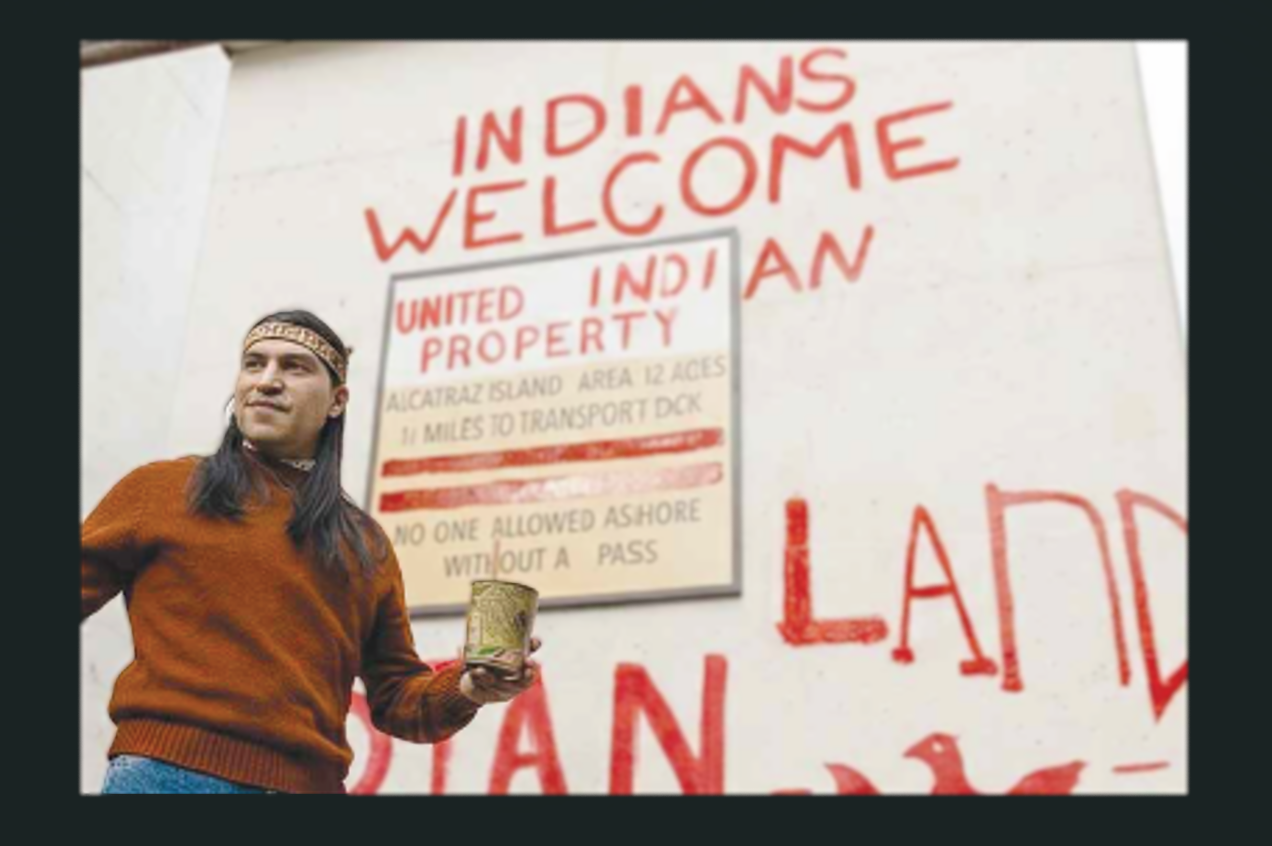
Photo: Dennis Turner Indian at Land Alcatraz Occupation 1969, by Sheryl Jadrosich
We’ve all wondered at some time in our education, “What does history mean?” We spend our days remembering our own pasts, but what about the pasts of nations, tribes, and communities? Who tells their stories, and who do we believe? The ancient Greeks had Clio, whom they honored as their muse of history, “to recount,” “to make famous,” or “to celebrate” events.
In the last several decades of contemporary times, many people have become suspicious of government and mainstream accounts and turned to historians who have gained their trust, such as Vine Deloria Jr., Roxanne Dunbar-Ortiz, and Howard Zinn.
Spoiler alert: Be prepared to be overwhelmed. Pechanga Creative Studios and co-producer Boardwalk Pictures has released a ten-part episodic series: People of the West, which upends everything Hollywood has been telling us about the so-called savage redskins for over a century. In a stunning display of cinematography and storytelling, their creative team, assembled by Brad Munoa and Nico MaGee, has found a way to combine oral history with the written word, translating their message into a visual buffet that reverses the stereotypes we have been spoon-fed. Finally, at long last, the cast and crew of hundreds have managed to “get the word out.” Each episode has a theme but can stand alone as a teaching experience we all should have been subjected to years ago.
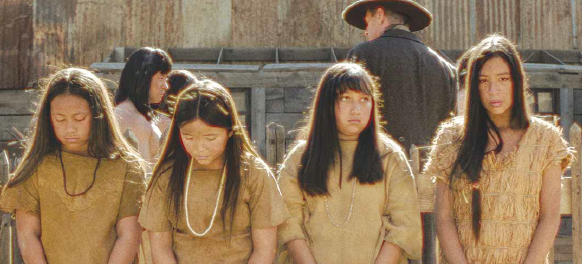
Photo: Fort Seward Native Girls Sold Lucy Young Humboldt CountyCalifornia 1860s, by Sheryl Jadrosich
“Idle No More”
This groundbreaking series will lead a younger generation to demand truth-telling in their curricula. No more will they accept the slick lies of “Manifest Destiny,” and the “heroic” adventures of the U.S. Cavalry. There exists ample documentation of the atrocities committed by an army bent on the genocide of Native Americans.
Overcoming five centuries of conquistador lies in under ten hours is a Herculean task, but the Pechanga team has managed to cleanse the stables of history. They have exposed colonial delusion. The aim of each episode is to correct false narratives. The quote below by Lee Harvey Oswald shows how easily history can be distorted. Despite documented proof that Oswald was set up to take the fall for murdering JFK, history books continue to mislead us to believe he was a lone assassin. People of the West avoids falling for the scam of manufactured history. Instead, Tribal Elders, teachers, and Native historians set the record straight.
Each episode stands on its own, and everyone will have his or her favorite. The most poignant for this writer was watching episode 8, which examines the emergence of the Red Power movement and the occupation of Alcatraz. Led by many women, illustrating matriarchal influence, LaNada WarJack and Mary Turner set out with scores of occupiers to take over Alcatraz Island, electrifying the nation and notifying the powers-that-be that they had illegally taken the island in the San Francisco Bay. This movement was a long-awaited takeback. The collective energy of randomly choreographed activists demanded recognition after centuries of brutality and neglect.
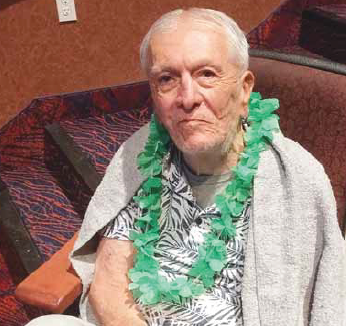
Professor Emeritus Ed Castillo. He stormed Alcatraz with his students
UCLA Professor Ed Castillo led his students from a Los Angeles classroom to the former prison in the San Francisco Bay. He says, “I was tired of teaching history, I wanted to be part of history!” Richard Oakes, a young, soft-spoken man who had a fire of desire raging in his belly became the spokesperson for the occupation. The tragedy and unresolved circumstances of his thirteen-year-old daughter’s death momentarily stunned the community but did not stop the momentum of the greater cause. Richard and his wife Annie left the island afterward, and a few years later, he was shot to death at the age of thirty — so many misfortunes, so many catastrophes that only an acquired resilience can overcome.
The final episode is perhaps the most uplifting. It reveals who are the intended stewards of our incredible landscape, and it tells the vital story of the reclamation in many parts of the state. The Chumash have returned to the waters off the coast of central California. They have established a marine sanctuary in the Pacific, where kelp is thriving again. In the east-central part of the state in what is now Riverside County, the Cabazon Band of Cahuilla Indians own a casino after years of legal wrangling (California v Cabozon Band) and, like so many other indigenous nations, have forcefully demonstrated their sovereignty. And, so utterly important to all the state’s residents having to live with the fear of devasting wildfires, the Yurok firefighters to the North have revived traditional burning to heal the earth.
The story of California, and of America itself, cannot be told truthfully without Native voices. Curator and archeologist Myra Maisel-Zamora eloquently spins her Pechanga people’s past. Dr. Stanley Rodriguez, Kumeyaay elder and scholar, weighs in during several episodes. Steve Banegas speaks on behalf of the Barona Museum. This is not just history; it is legacy, survival, and a lesson in how understanding the past can shape a more equitable future. People of the West challenges the impulse to whitewash the past or reshape it into something comfortable and false. Only by confronting the truth can we make informed choices for the future. When history is hidden, ignorance thrives; when it is acknowledged, understanding and healing can begin. The series reminds us that facing the full truth—however painful—is what sets all of us, Native and non-Native alike, on the path toward a more honest and unified tomorrow.
Kudos to casting for finding the smarmy villains who send out a creepy chill that emanates from the big screen but are soothed over time by the eye candy of the vibrant beauty of the first occupants. The sets were meticulously adorned by Michael Fitzgerald. The leading character of all ten thrilling episodes is the earth itself—the lakes, the rivers, and the mountains in all their glory.