

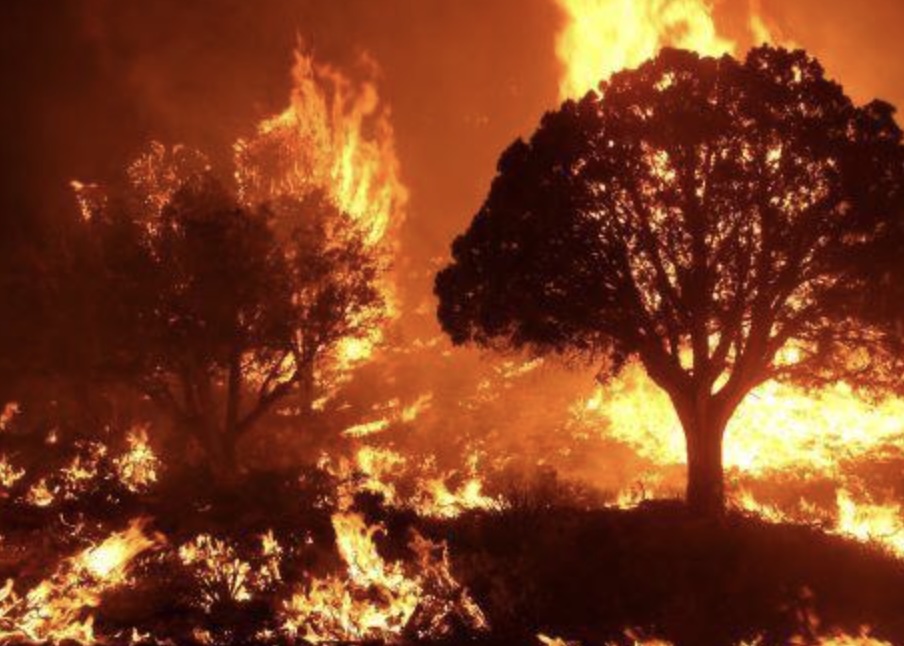
“People’s biggest fear is not just the fire itself, but feeling alone and uninformed,” Omaira Baptista told reporters during a California wildfire preparedness briefing.
Baptista, a community educator and promotores coordinator with UpValley Family Centers, has seen that fear at close range. Her organization serves immigrants, agricultural workers, older adults, people with disabilities and residents with limited English proficiency in Napa and Lake counties. During the Glass Fire, she said, families needed more than plans on paper. They needed clear information from people they trusted.
That lesson shaped an Aug. 20 briefing hosted by California Black Media and American Community Media with the Governor’s Office of Emergency Services. State officials and community workers focused on a basic problem: an emergency alert is useful only if a resident receives it, understands it and can act on it.
The issue is especially important in rural and tribal communities, where distance, limited transportation and gaps in cellphone service can complicate an evacuation. Older adults and people with disabilities may also need time to secure medications, mobility equipment, service animals or help from a caregiver. Officials said preparation has to begin before the hot, dry winds of fall create another fast-moving emergency.
Matt Notley, Cal OES deputy director of crisis communications and public affairs, said the state coordinates the California Fire and Rescue Mutual Aid System, which links more than 1,000 local fire agencies. Counties can ask Cal OES to position engines, water tenders, hand crews and dispatch personnel near areas facing dangerous fire weather. Notley said 46 county requests had been approved this year. The state spent about $61 million on prepositioning in 2025.
Cal OES also uses aircraft equipped through the Fire Integrated Real-Time Intelligence System to map fires within minutes and provide information to commanders on the ground. The aircraft had flown 324 missions this year, Notley said. The system can improve decisions during the first hours of a fire, but the briefing repeatedly returned to what happens after information leaves the command post and must reach a household.
Ready California, also known as Listos California, has spent more than $100 million on preparedness outreach since 2019, according to Davina Mapes, a Cal OES public affairs manager. Its network includes tribal governments, local agencies, Community Emergency Response Teams and nonprofit groups. Materials are available in as many as 25 languages. Mapes said the campaign has recorded nearly 16 million face-to-face contacts, distributed 6.7 million printed materials and generated 103 million digital impressions.
State research found that people often delay preparation because the subject feels overwhelming, costs seem too high or daily needs take priority. Concrete instructions worked better than broad warnings, Mapes said. The state’s new wildfire materials explain how to sign up for alerts, plan an evacuation route and prepare essential documents. They are available free through Ready California.
Steven Vera of the Disability Services and Legal Center in Santa Rosa said agencies should use several ways to reach residents. An email about a planned power outage may be ignored by someone who assumes it is a bill notice. A text, phone call and voicemail can make the difference. “Ask, don’t assume,” Vera said. Plans should account for the whole person, including transportation, medication, equipment and support networks.
Questions from reporters exposed areas where state guidance remains less direct. Asked whether low-income neighborhoods were underserved during the 2025 Los Angeles fires, Notley referred the question to Los Angeles County. He also said response times are determined by local fire departments. Cal OES pointed reporters to a state after-action report for lessons from the Eaton and Palisades fires.
Officials were more specific about access to emergency shelter. Mapes said mass-care shelters are open to everyone, including undocumented immigrants, and do not require proof of immigration status. The clarification matters in communities where residents may avoid government programs because they fear being asked for personal information.
Baptista said preparedness workshops work because the people delivering the information live in the same communities they serve. When families hear simple steps in their own language, she said, they are better able to make decisions before, during and after a fire. Vera closed with equally practical advice: agree on a family plan, prepare a bag and keep documents such as birth certificates together.
The state can move equipment before a red-flag warning and map a fire from the air. Whether residents get out safely can still depend on a smaller network: a relative who knows the plan, an organization that speaks their language or a neighbor who checks the door before leaving.


