

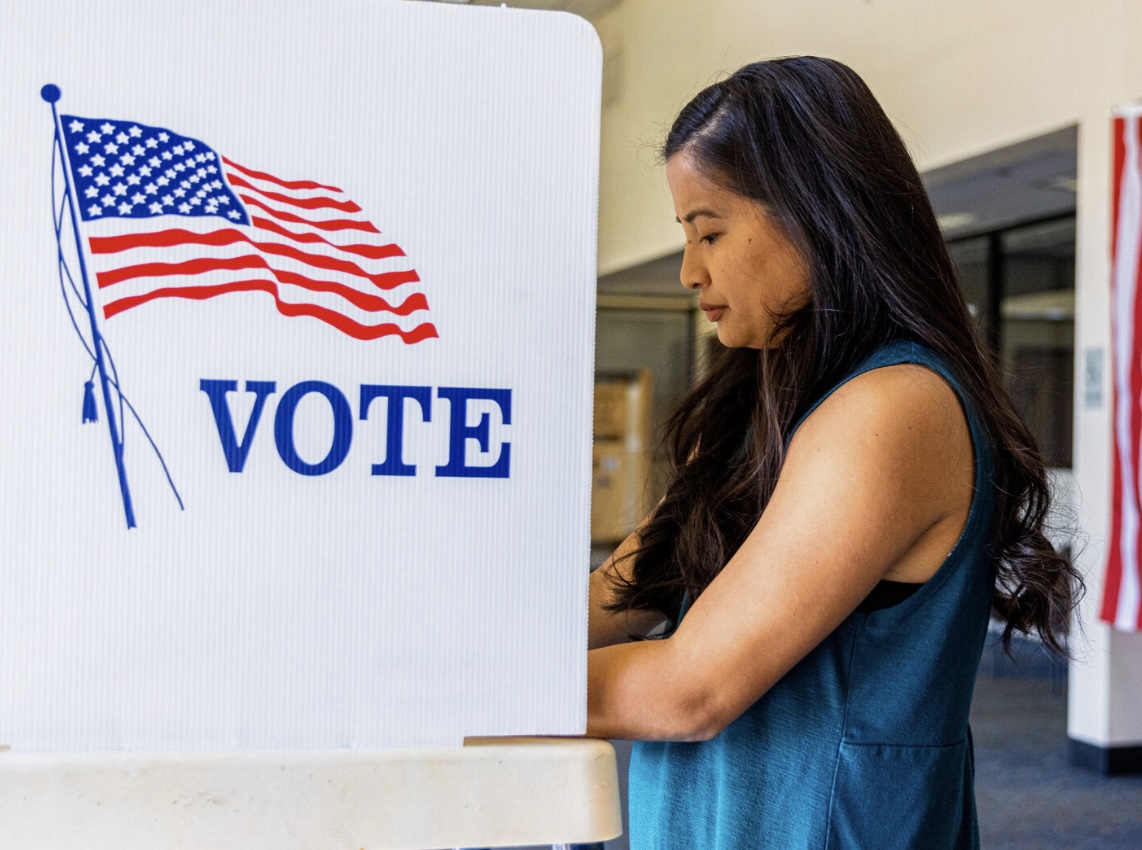
As the United States prepares for the 2026 midterm elections, voting rights advocates and election experts are warning that a growing patchwork of state laws, legal challenges and administrative changes could make it more difficult for some eligible Americans to cast a ballot. During an American Community Media briefing, speakers emphasized that misinformation about election fraud continues to drive many of the proposed changes despite decades of evidence showing voter fraud is exceedingly rare.
Thomas Saenz, president and general counsel of the Mexican American Legal Defense and Educational Fund (MALDEF), said the greatest immediate concern is not presidential executive orders but state laws that could restrict voter registration, identification requirements and ballot access. He noted that a recent U.S. Supreme Court decision has also made it more difficult to challenge congressional redistricting plans under the Voting Rights Act, potentially reducing the number of majority-Black districts in several Southern states.
Saenz stressed that Congress, not the president, has constitutional authority over federal election laws. While proposals such as the SAVE Act continue to be debated, he urged voters to focus on understanding their own state's requirements well before Election Day. "The most important thing now is accurate information about what it will take to vote," he said, encouraging journalists and community organizations to help voters learn registration deadlines, identification requirements and polling procedures before legal challenges are resolved.
Much of the discussion centered on voter identification laws, which now exist in some form in 38 states. Dah Kim, policy and advocacy manager for VoteRiders, said the organization's research shows that nearly 21 million voting-age Americans do not have a current, unexpired driver's license, while millions more have identification that does not reflect their current name or address. Young adults, rural residents, people with disabilities and communities of color are disproportionately affected.
Kim said newer proposals requiring documentary proof of citizenship, such as a passport or birth certificate, could create additional barriers. "These laws are a solution in search of a problem because voter fraud is virtually non-existent," she said. VoteRiders regularly assists eligible voters by covering transportation costs, helping obtain replacement documents and paying fees associated with securing acceptable identification.
The briefing also examined how election administration changes can affect voter confidence. Annelise Pierce, founder and managing editor of the Shasta Scout, described how Shasta County in Northern California has become a closely watched example after election activists successfully pushed for changes to local voting procedures, including efforts to move away from electronic voting systems and adoption of a local ballot measure that remains tied up in court.
Pierce said many of the practical consequences have come not from proven fraud, but from administrative changes that created confusion for voters and poll workers. She described longer lines, inconsistent poll worker training and uncertainty over future election procedures. "The public needs to understand how to vote and they need to feel safe coming to vote," she said, arguing that confidence in elections depends as much on transparency and consistency as on the laws themselves.
When asked about repeated claims of widespread voter fraud, Saenz rejected the premise, saying there is no evidence that non-citizens or other ineligible voters are participating in elections at meaningful levels. Instead, he expressed greater concern about misinformation, disinformation and the possibility that election officials could improperly reject legitimate ballots during the counting process.
Speakers agreed that the months leading up to the 2026 midterms will be shaped less by isolated cases of fraud than by public understanding of rapidly changing election rules. They urged journalists to prioritize clear reporting on state voting requirements and election procedures, arguing that informed voters remain the strongest safeguard for election integrity.


