
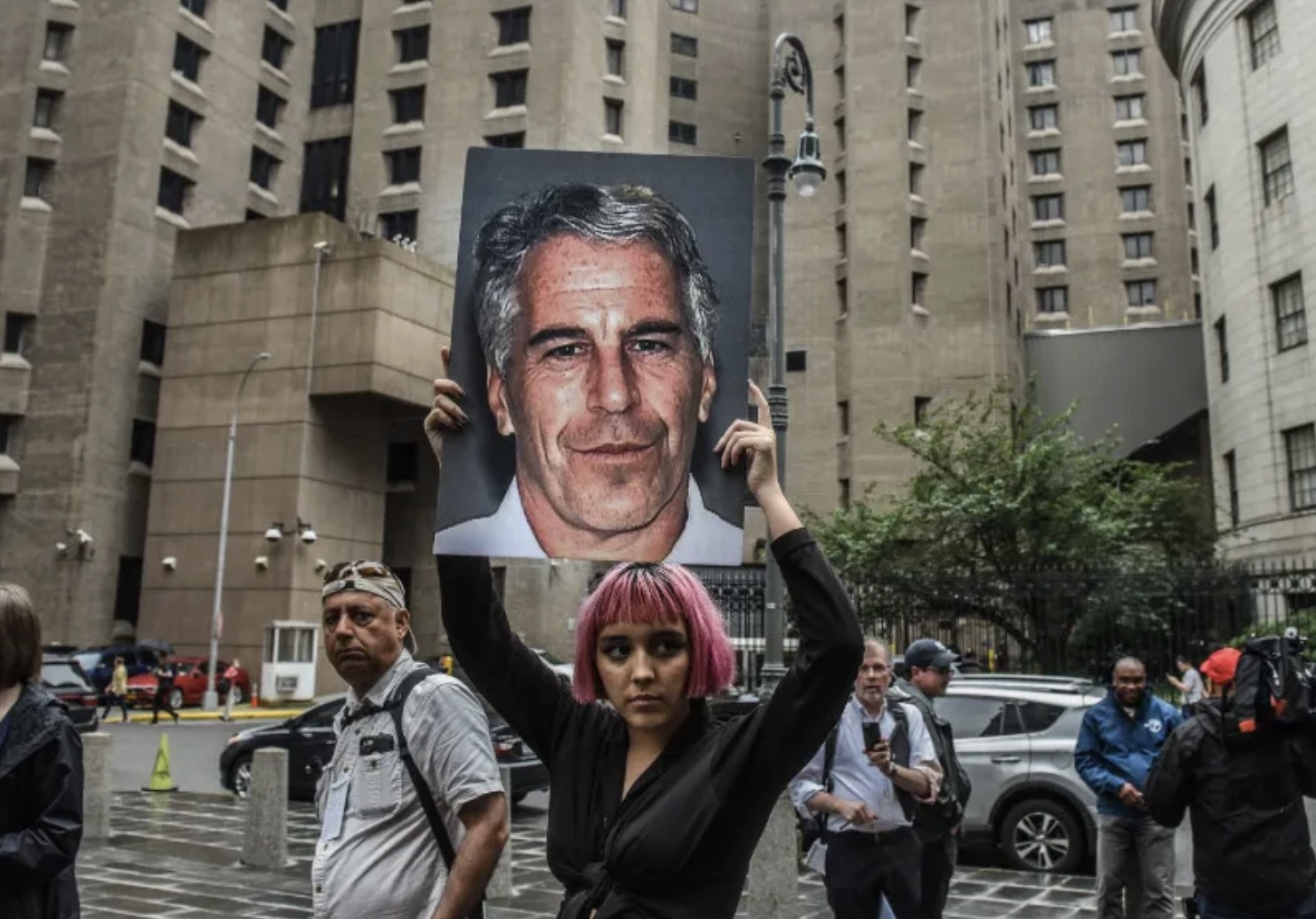
I was able to attend the ACOM briefing, as hosted by the usually brilliant Pilar Marerro and honestly, it cut right to the chase.With the Epstein files back in headlines, a lot of the national conversation has turned into a messy hunt for famous names, political fallout, and internet, whip-fast culture. But the panel kept bringing the focus back where it belongs, on survivors and the systems that keep failing them.
Pilar, associate editor at American Community Media, opened with the clearest point of the morning: “The survivors who were exploited by Epstein and his cohorts have largely been relegated to the sidelines.” That set the tone - about what happens when media attention gets pulled toward power and away from the people actually harmed.
Dr. Michele Goodwin, a Georgetown law professor known for her work on constitutional law and gender justice, put it plainly: “There is a connection between power, violence and the silencing of people who have been sexually assaulted.” She traced that pattern through American law and culture, showing how hard the system has always worked to protect reputations before people. Her most striking point was that the issue is bigger than Epstein. The real story is the structure around him, the courts, the politics, the reluctance, the endless demand that survivors somehow produce perfect evidence after surviving the unimaginable. But is that the story being covered? It seems to be the more challenging one, doesnt it? Because it questions the state itself.
That theme carried into the remarks from Carmen McDonald, executive director of the Survivor Justice Center in Los Angeles. McDonald works directly with low-income survivors of domestic violence, sexual assault, and trafficking, and she spoke with the kind of practical clarity that comes from being in it every day. “There’s always the fear of arrest,” she said, describing how survivors can be punished for crimes they were coerced into, or silenced by threats, records, immigration fears, and shame. Her point was sharp. Trafficking isn't a dramatic action movie with slick hair and guns. Mostly, it involves more insidious things like manipulation, dependency, and a thousand barriers stacked on top of each other. Stacks of paperwork is harder to Hollywood-ize.
Jacquelyn Aluotto, co-founder and president of No Trafficking Zone in Houston, brought serious fire. Her organization has helped push legislation in Texas aimed at making trafficking prosecutions tougher and more targeted. But what really stood out was her challenge to the press: “We need for journalists to be just as brave as survivors.” That line stayed with me. Sometimes media is emboldened only once the story is already impossible to ignore. Meanwhile survivors are asked to risk everything much earlier, with far less protection - and with huge scruity and risk of reputation and livlihood.
Then came Courtney Litvak, a survivor of sex trafficking and former member of the U.S. Advisory Council to Combat Human Trafficking, whose testimony brought the room back to the human center of all this. Litvak described being targeted as a teenager, failed by adults and institutions, and pulled into years of trafficking. Her line was simple and devastating: “There is no such thing as a perfect victim.” That should not be a radical statement, but somehow it still is, isn't it? She also urged reporters to follow the money, not just the scandal, and to look at the broader networks that allow exploitation to thrive.
What made this briefing feel especially relevant in the current Indigenous news climate is that none of this sounded unfamiliar. Indigenous communities have long understood that violence does not happen in a vacuum.
The briefing brought it back to this: its about the systems that still continue to fail, and evade scrutiny. Maybe we should be looking into the system as much as the man.
If journalists want to cover stories like this well, they need to stop orbiting power and start listening harder to survivors.


