
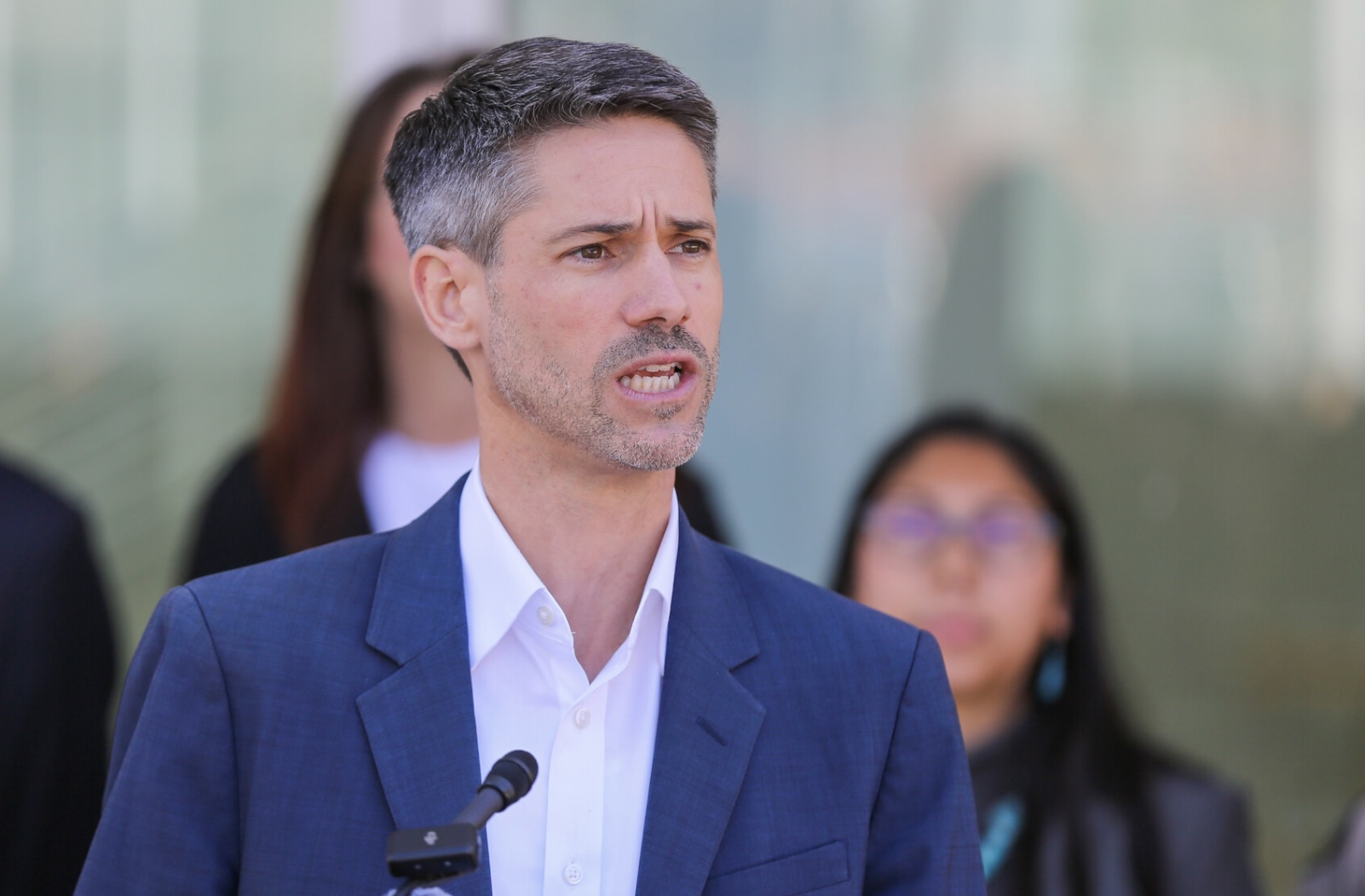
"I really believe the answer is to create a pathway to permanent legal status, ideally citizenship, for everyone who's here."
San Jose Mayor Matt Mahan did not hesitate when asked how California should respond to the national debate over immigration. Speaking as a candidate for governor, Mahan argued that undocumented families who have built lives in California should be protected while the country pursues broader immigration reform. He paired that position with support for legal immigration pathways and stronger border security, describing both as necessary parts of a long-term solution.
The remarks came during a wide-ranging discussion that touched on immigration enforcement, housing affordability, healthcare access, artificial intelligence, economic mobility, and racial equity. Throughout the conversation, Mahan repeatedly returned to a central argument: that California's biggest challenges are not the result of a lack of resources, but of policy systems that are failing to deliver results for working families.
Mahan, who is currently serving as mayor of San Jose, described growing up in a farming community on California's Central Coast where many of his neighbors were undocumented agricultural workers. He criticized both political parties for what he characterized as decades of failure on immigration policy and said immigrant families have too often become political targets despite contributing to their communities, paying taxes, and raising children who are often U.S. citizens.
He pointed to actions taken in San Jose under his administration, including legal challenges against the Trump administration, expanded funding for immigrant legal services, and restrictions on the use of city property by federal immigration agents. Asked whether ICE agents should face prosecution for violating California law, Mahan responded that no one is above the law and that law enforcement officers should be held accountable when they break the law, just as local police officers are.
Housing affordability emerged as another major theme. Mahan argued that California's housing shortage remains the central driver of the state's cost-of-living crisis. He noted that many young Californians are leaving the state, including members of his own family, and said housing production has been constrained by fees, permitting delays, and regulations that increase the cost of construction.
Drawing on his experience in San Jose, Mahan described efforts to reduce development fees, streamline permitting, encourage accessory dwelling units, and move housing approvals away from lengthy political processes. He also highlighted construction defect liability laws as a major obstacle to condominium development, arguing that the lack of new condominiums contributes to California's low homeownership rate.
On healthcare, Mahan acknowledged concerns surrounding potential federal funding cuts and said California will need to find ways to preserve access to care while improving efficiency. He advocated expanding telehealth, allowing more out-of-state providers to serve California patients, and enabling nurses to practice at the full extent of their licenses. He also called for greater investment in rural healthcare and loan forgiveness programs designed to attract medical professionals to underserved communities.
Artificial intelligence generated several questions from reporters. As mayor of a city often considered the capital of Silicon Valley, Mahan said technological change will inevitably reshape the workforce but argued that government should focus on helping workers adapt rather than attempting to stop innovation. He highlighted San Jose's work developing AI governance frameworks and workforce training programs while also supporting regulations around privacy, transparency, and the responsible use of emerging technologies.
Mahan said California should continue taxing technology companies while ensuring they contribute to infrastructure costs and workforce development. He proposed using a portion of the revenue generated by AI-related industries to support apprenticeships, job training, and reskilling programs. He also suggested that policymakers may eventually need to explore new economic supports if technological disruption significantly increases unemployment.
Questions from reporters also touched on California's large immigrant workforce, including H-1B visa holders and international students. Mahan rejected anti-immigrant rhetoric and said people who live, work, study, and pay taxes in California should have access to public services and opportunities regardless of where they were born. He described immigration as one of California's greatest strengths and said the state's diversity is central to its economic and cultural success.
When asked about reparations for Black Californians, Mahan acknowledged the lasting impacts of slavery, redlining, discrimination, and disinvestment. However, he expressed skepticism about reparations as a policy tool, arguing that legal and political obstacles make implementation difficult. Instead, he advocated directing resources toward communities experiencing the greatest disparities in income, wealth, homeownership, public safety, education, and infrastructure. He argued that focusing on measurable outcomes can help address inequities while avoiding some of the challenges associated with race-based programs.
As the conversation concluded, Mahan rejected suggestions that he is simply the candidate of Silicon Valley's wealthy technology sector. While acknowledging support from some technology leaders, he emphasized his record regulating artificial intelligence and advocating safeguards around social media, education, healthcare, and employment. He described himself as a pragmatic Democrat focused on outcomes rather than ideology.
"I believe the best resistance to authoritarianism is results," Mahan said in his closing remarks. "Making government work for people." Whether discussing immigration, housing, healthcare, or technology, that message remained at the center of his case for why he believes he should become California's next governor.


