
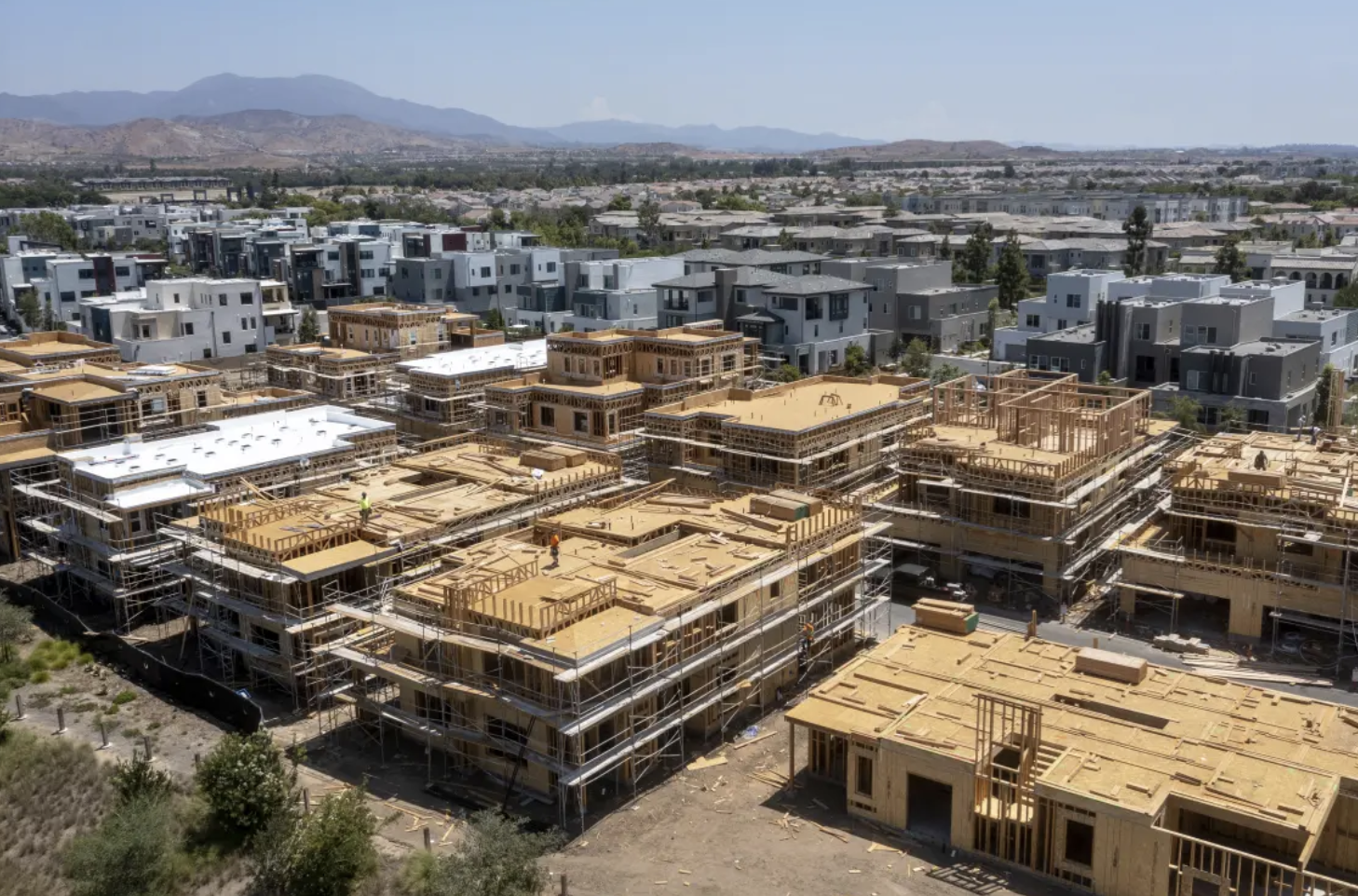
“We know that the solution to homelessness is housing,” said Dr. Ryan Smith, president and CEO of St. Joseph Center in Los Angeles, where his organization serves approximately 15,000 people annually through housing assistance, mental health services, and workforce development programs.
As California struggles with soaring housing costs and persistent homelessness, voters will decide on November 3 whether to approve Proposition 1, a measure authorizing $11.25 billion in state bonds to finance affordable housing construction, homeownership assistance, and housing programs for veterans and other vulnerable populations.
During an October 13 briefing hosted by American Community Media, housing advocates and researchers discussed how the measure would work, who would benefit, and why they believe additional public investment is necessary.
Only 22% of California households can afford a median-priced home, according to figures presented during the briefing. More than half of renters spend over 30% of their income on housing.
The disparities are especially pronounced among communities of color. Just 11% of Black and Latino households can afford a median-priced home, compared with approximately 23% of white households.
Black Californians represent roughly 7% of the state's population but 26% of its unhoused population.
Francisco Dueñas, executive director of Housing Now, described additional challenges facing immigrant families, farmworkers, seniors, and Asian American and Pacific Islander communities.
He noted that overcrowded housing is often a consequence of unaffordable rents, with multiple generations sharing homes to manage expenses.
Undocumented immigrants may face even greater housing insecurity, particularly when their options are limited by concerns about immigration enforcement.
Chione Flegal, executive director of Housing California, explained that California's state-funded housing programs do not categorically exclude undocumented immigrants or mixed-status families, although eligibility varies by program.
Proposition 1 would fund several existing housing programs alongside initiatives designed to prevent displacement.
Jessica Hitchcock, managing director of research at the California Housing Partnership, outlined the proposed investments, including:
Additional funding would support farmworker housing, tribal communities, and local housing initiatives.
Hitchcock estimated that the measure could help accelerate approximately 40,000 affordable rental homes already in development and assist 20,000 households with affordable homeownership.
Over a 55-year period, the California Housing Partnership projects that the investments could benefit more than 500,000 households, representing approximately 1.4 million Californians.
These figures are projections rather than guaranteed outcomes.
Flegal said California has made progress in reducing regulatory barriers to affordable housing construction, but financing remains a major obstacle.
She described approximately 40,000 affordable homes in the development pipeline that have completed important planning and approval processes but are waiting for funding.
The bond could help move some of those projects into construction.
For organizations working directly with unhoused residents, the shortage of permanent housing remains a central challenge.
Smith said outreach workers can connect people with benefits, counseling, and temporary shelter, but often struggle to find affordable permanent homes for them.
He emphasized that supportive housing combines affordable rent with services such as mental healthcare, employment assistance, and case management.
“Housing first, but not housing only,” Smith said, describing the importance of ongoing support in helping people remain housed.
The proposal also includes funding specifically targeting communities with distinct housing needs.
Hitchcock highlighted investments intended to assist approximately 2,500 farmworker families and members of California's tribal communities through dedicated housing programs.
Farmworkers often live in overcrowded or substandard conditions, even while working in some of the state's most expensive regions.
For students, Proposition 1 would provide $350 million toward affordable housing, projected to create more than 1,400 student homes.
The California Housing Partnership estimates those homes could benefit more than 40,000 students over their expected lifespan as residents graduate and new students move in.
The measure would also support the acquisition and rehabilitation of existing rental properties, allowing community organizations and housing providers to preserve affordability and reduce displacement.
Proposition 1 would not directly establish a new tax. Instead, California would borrow money by issuing bonds, which would be repaid with interest from future state general fund revenues.
That distinction matters because repayment would create a long-term financial obligation for the state.
Supporters argue that housing is a form of public infrastructure whose benefits extend across generations.
Hitchcock estimated that the proposed investments could eventually generate nearly $500 million in annual rent savings for participating households once the housing is built.
However, those projected savings would accrue to residents and are not equivalent to revenue available to repay the bonds.
The briefing featured supporters of Proposition 1 and did not include representatives of an opposition campaign.
Even supporters acknowledged that the measure would not resolve California's housing crisis on its own.
Flegal said addressing the shortage at scale would require sustained investment, stronger tenant protections, and additional policies to reduce construction costs and expand housing availability.
“This bond is not going to drive down housing prices for all Californians who are struggling,” she said.
She described Proposition 1 as one part of a larger effort that would require years of continued action.
For voters, the question is whether the potential benefits of expanding and preserving affordable housing justify the state's long-term borrowing costs.
The decision comes as California continues to grapple with a housing shortage that affects not only those experiencing homelessness, but also working families, seniors, students, and communities struggling to remain in the places they call home.


