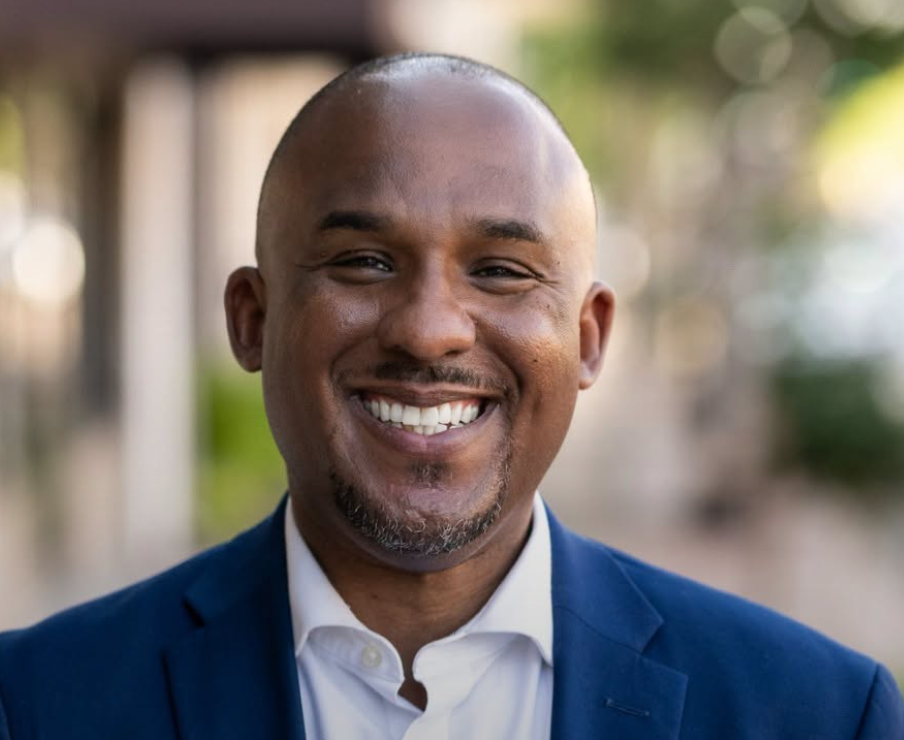
Photo: Senator-Elect Scott Colom of Mississippi, who beat the last firewall of the Republican "Solid South" in Nov 2026 election
From Nina Simone’s “Mississippi Goddam” to Scott Colom’s Historic Victory: A Reckoning
150 Years in the Making
November 2026
There are moments in history when the past does not simply whisper to the present. It rises, demands our attention, and reminds us that justice delayed is not necessarily justice defeated.
November 2026 has given us such a moment.
In Mississippi, a state whose soil holds the blood, sweat, tears, and unfulfilled dreams of generations of African Americans, Scott Colom has been elected to the United States Senate.
Let that sink in.
A Black man. Elected by the people of Mississippi. To represent the state in the United States Senate.
For the first time since Reconstruction, Mississippi has elected a person of African descent to that chamber.
And to fully appreciate the magnitude of this moment, we must understand that we have not been waiting merely for an election.
We have been waiting for America to honor a promise it made more than 150 years ago.
THE PROMISE OF RECONSTRUCTION
In 1870, Hiram Rhodes Revels of Mississippi became the first African American to serve in the United States Senate. Five years later, Blanche Kelso Bruce, formerly enslaved, began his historic Senate service.
Imagine the possibilities those moments represented.
Only a few years after emancipation, Black men were helping shape the laws of a nation that had once classified them as property.
Reconstruction offered a glimpse of what American democracy might become when citizenship, political participation, and representation were extended to formerly enslaved people.
But that promise was systematically dismantled.
Through violence, intimidation, disenfranchisement, segregation, and the institutional machinery of Jim Crow, African Americans were pushed from the corridors of political power.
And for nearly a century and a half, Mississippi did not send another Black person to the United States Senate.
Until Scott Colom.
His victory does not erase that history. It forces us to confront it.
What might Mississippi have become had the promise of Reconstruction been allowed to flourish?
How many generations of leadership were denied the opportunity to serve? How many brilliant minds were excluded? How many communities were forced to wait for representation that should never have been withheld?
And perhaps most importantly, who benefited from our exclusion?
NINA SIMONE TOLD US: WE COULD NOT AFFORD TO GO SLOW
In 1964, Nina Simone gave America one of the most uncompromising protest songs of the Civil Rights Movement: Mississippi Goddam.
Her anger was neither accidental nor theatrical.
It was a response to the murder of Medgar Evers in Mississippi, the bombing of the Sixteenth Street Baptist Church in Birmingham, and the relentless violence directed against African Americans demanding their constitutional rights.
But Simone’s song was also a blistering rejection of a familiar instruction delivered to Black Americans by those who claimed that racial progress required patience.
“Go slow.”
Go slow with integration.
Go slow with voting rights.
Go slow with equal opportunity.
Go slow with justice.
For generations, African Americans were told that meaningful change would come eventually, provided we remained patient, respectful, and willing to wait.
But what does patience mean to a mother whose child has been denied an education?
What does patience mean to a cotton picker whose labor enriched a nation while his family remained trapped in poverty?
What does patience mean to a citizen whose constitutional right to vote has been obstructed?
And what does patience mean when an entire people are expected to wait nearly 150 years for a political opportunity that Reconstruction had already demonstrated was possible?
Nina Simone understood something that America has repeatedly struggled to acknowledge:
Justice does not become more just because it arrives slowly.
Scott Colom’s election does not invalidate Simone’s protest. Rather, it gives us an opportunity to answer the question her music placed before the nation.
How long must a people wait?
The answer should never have been 150 years.
FROM THE COTTON FIELDS TO THE UNITED STATES SENATE
As a public historian whose work has been devoted to recovering the forgotten voices of Mississippi’s cotton pickers, sharecroppers, and their descendants, I cannot separate this political milestone from the history of the land itself.
The Mississippi Delta helped build the wealth of America.
Its cotton fields supplied industries, fueled international commerce, and generated fortunes that extended far beyond the borders of this state.
Yet the people whose hands harvested that cotton were too often excluded from the wealth they created and the political institutions that governed their lives.
Our grandmothers and grandfathers picked cotton under the blistering Mississippi sun. They raised families, established churches, founded schools, organized communities, and sustained traditions of faith, resistance, and cultural expression.
They also understood the power of the ballot.
They understood that political representation was not simply about occupying a seat. It was about having a voice in determining the future of one’s children and grandchildren.
From the courage of Fannie Lou Hamer to the sacrifice of Medgar Evers, from the organizing traditions of the Mississippi Freedom Democratic Party to the countless unnamed citizens who registered voters despite threats to their livelihoods and lives, Mississippi’s political transformation has been generations in the making.
Scott Colom did not arrive at this historic moment alone.
He stands upon a foundation constructed by people whose names may never appear in a history textbook.
Some wore suits and carried briefcases.
Others wore overalls and carried cotton sacks.
All of them helped make this moment possible.
THE MYTH OF “GO SLOW” HAS BEEN EXPOSED
For too long, the argument that Mississippi was simply not ready for certain forms of political change has been treated almost as conventional wisdom.
Not ready for integration.
Not ready for equal representation.
Not ready for Black statewide leadership.
Not ready for the future.
But ready according to whom?
And who was given the authority to determine the speed at which another person’s freedom should advance?
The election of Scott Colom challenges the notion that Mississippi’s political possibilities must forever be confined by its racial history.
His victory was achieved through the votes of Mississippians across racial and community lines. It demonstrates that political outcomes once considered beyond reach can change.
That does not mean Mississippi has overcome every inequality or that one election resolves generations of injustice.
It means something equally important.
The boundaries of what is politically possible are not permanent.
The question now is whether this moment will inspire a deeper commitment to protecting voting rights, expanding civic participation, strengthening public education, addressing poverty, and ensuring that all Mississippians have a meaningful voice in their government.
Representation is a milestone.
Accountability is the work that follows.
And democracy must be measured not only by who wins an election, but by whether the lives of ordinary people improve.
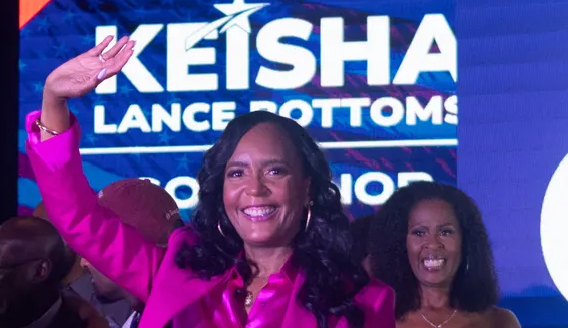
Georgia Governor-Elect Keisha Lance Bottoms
AND THEN THERE IS GEORGIA!
As though history had decided that one extraordinary political milestone was not enough, our neighbors in Georgia have given the nation another moment worthy of reflection.
Keisha Lance Bottoms has been elected governor of Georgia.
The first African American woman elected governor of any state in the history of the United States of America.
Consider the weight of those words.
In a nation where Black women have served as organizers, educators, community builders, political strategists, and guardians of democratic participation for generations, no Black woman had ever been elected to lead a state as governor.
Until now.
Georgia’s election carries particular historical resonance. This is the state associated with the legacy of Dr. Martin Luther King Jr., the organizing traditions of the Civil Rights Movement, and generations of Black women whose leadership helped expand American democracy.
And now a Black woman will occupy its highest executive office.
Her victory is not merely a personal accomplishment. It is a milestone in the continuing struggle to make political institutions more representative of the people they serve.
And I must confess, there is something wonderfully powerful about the name itself.
Not a name that must be shortened, disguised, or made more comfortable for someone else’s expectations.
Not a name that must apologize for its cultural resonance.
Her name is Keisha.
KEISHA!
A name familiar in countless African American households, classrooms, churches, beauty shops, college campuses, and family reunions.
A name that carries its own rhythm, its own familiarity, and its own place in the American cultural landscape.
And now that name will be spoken with the title Governor.
Governor Keisha Lance Bottoms.
For generations of young Black girls who have been encouraged to dream while simultaneously confronting barriers to leadership, this moment expands the historical record of what has been achieved.
It is a reminder that neither gender nor race should determine the limits of public service.
THE ANCESTORS DID NOT LABOR IN VAIN
I think about our ancestors.
I think about the women who worked from sunrise to sunset, who prayed over their children, and who imagined possibilities they themselves would never live to experience.
I think about the men who endured humiliation and economic exploitation yet continued to insist upon their dignity.
I think about the elders whose stories I have spent years trying to preserve.
Grandmama’nem are the Archive.
And somewhere within that living archive are the hopes of people who believed that their descendants might one day inherit a more democratic America.
Would they have imagined a Black man elected to the United States Senate from Mississippi in 2026?
Would they have imagined a Black woman named Keisha elected governor of Georgia?
Perhaps.
But I suspect they would also ask us a question.
What are you going to do with the opportunities for which we sacrificed so much?
That is the question this generation must answer.
Because history is not fulfilled by symbolism alone.
It is fulfilled when political representation is accompanied by meaningful improvements in justice, education, economic opportunity, cultural recognition, and the everyday lives of our people.
MISSISSIPPI, THE WAIT MUST NEVER AGAIN BE THE ANSWER
So today, I extend congratulations to Senator-elect Scott Colom on his historic election and acknowledge the extraordinary responsibility that accompanies his new office.
May his service honor the entire state of Mississippi, including those whose votes were cast for someone else.
And I extend congratulations to Governor-elect Keisha Lance Bottoms on a victory that has opened a new chapter in American political history.
May her leadership demonstrate that the significance of breaking a barrier is measured not only by the achievement itself, but also by the doors that remain open afterward.
To Nina Simone, whose voice continues to echo across the decades, I would offer this reflection:
You were right to reject the demand that we go slow.
You were right to insist that freedom and dignity could not be postponed indefinitely.
And although it has taken far too long, Mississippi has finally produced a moment that answers one of the great political exclusions of the post-Reconstruction era.
We should celebrate that achievement without forgetting the generations who were denied the same opportunity.
We should honor the victory without pretending the struggle is finished.
And we should recognize that democracy advances not through waiting alone, but through participation, courage, organization, and an unwavering insistence that every citizen belongs.
From the cotton fields of Mississippi to the halls of the United States Senate, from the freedom struggles of Georgia to its governor’s mansion, the story of American democracy continues to be written.
And this time, two remarkable chapters bear names that our ancestors might have spoken with pride.