

“There's really a need for this work to be done,” said Michael Roberts, President and CEO of First Nations Development Institute, speaking about the persistent lack of investment in Native voter outreach and political representation.
As the November 3 midterm elections approached, Native American leaders and researchers warned that Indigenous voters continue to face significant obstacles to political participation, even as a growing number of Native candidates and young organizers are reshaping the political landscape.
During an October 9 media briefing hosted by American Community Media, four speakers discussed the priorities of Native voters, barriers to accessing elections, tribal sovereignty, and the growing influence of Indigenous youth in political organizing.
The panel included Roberts; Melissa Rogers, Professor of Politics and Policy at Claremont Graduate University; Judith LeBlanc, a citizen of the Caddo Tribe of Oklahoma and Executive Director of Native Organizers Alliance; and Sage Phillips, co-coordinator of the Wabanaki Policy Youth Initiative.
Roberts argued that Native voters remain largely invisible in national political polling, media coverage, and campaign outreach, despite their potential influence in closely contested elections.
He pointed to the 2024 presidential election, when early exit polling suggested that 67% of Native voters supported Donald Trump. However, research conducted with First Nations Development Institute found a different result, with approximately 57% of Native respondents supporting Kamala Harris.
Roberts said the discrepancy demonstrated the importance of more representative polling and accurate reporting on Native communities.
He also noted that research conducted in 2024 found that upwards of half of Native voters had not been contacted by political campaigns before the election.
For Native communities, political priorities often include tribal sovereignty, cultural preservation, Indigenous languages, and land rights. However, Roberts emphasized that Native voters are equally concerned about inflation, housing affordability, employment, and other economic issues affecting the broader population.
“I think that people keep trying to make natives, these kind of mythical other creatures,” Roberts said, explaining that Native Americans share many of the same everyday concerns as other voters.
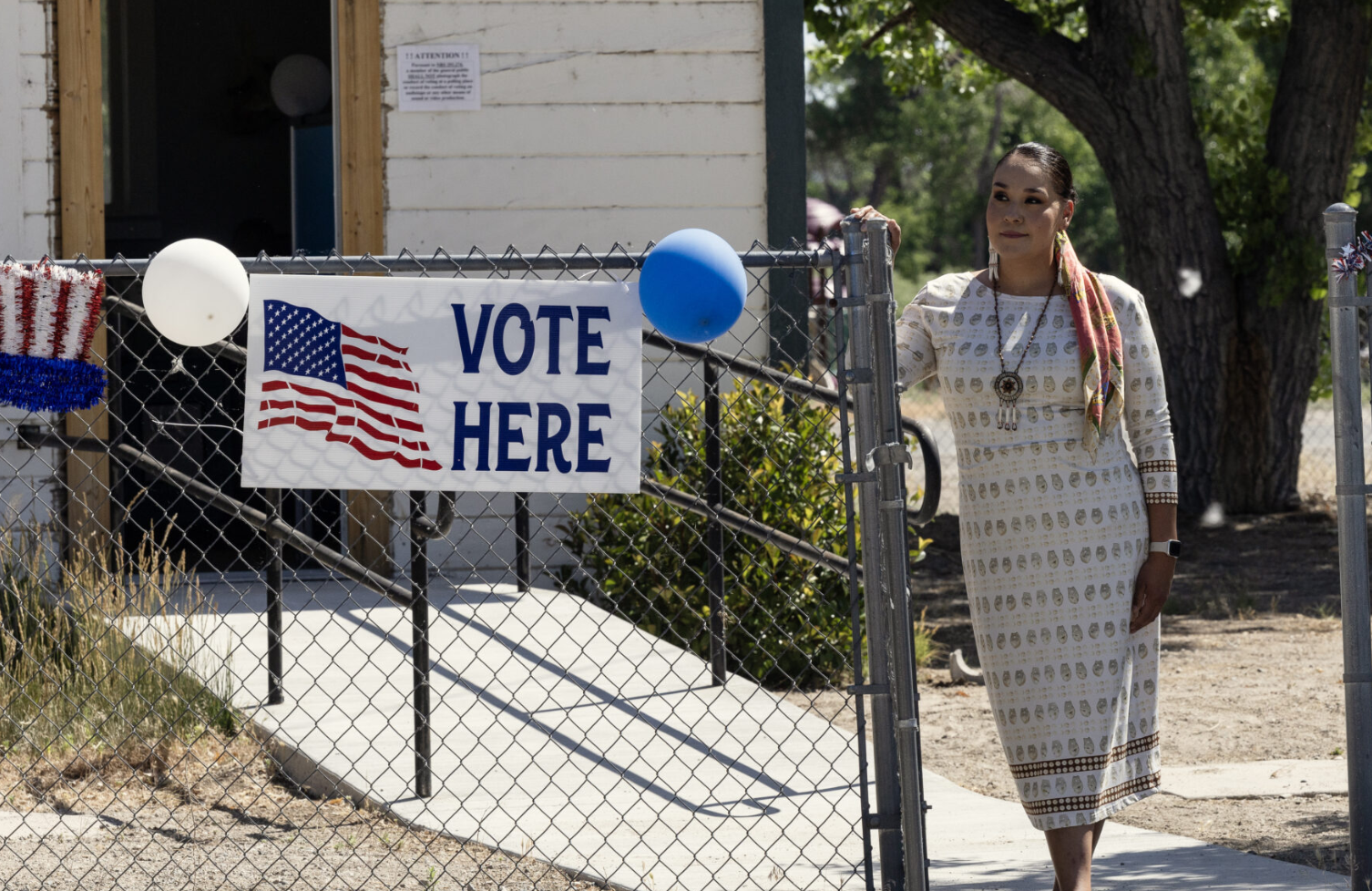
Melissa Rogers described the disproportionate challenges Native voters face when attempting to cast their ballots, particularly in rural reservation communities.
Her research examines the “cost of voting,” including the time, transportation, and resources required to register and reach polling locations.
In one example, Rogers described residents of the Duck Valley Reservation in Nevada who faced a 100-mile journey each way to reach a polling location in the Elko County seat.
She explained that polling places and registration services are frequently located outside tribal lands, creating significant barriers for voters without reliable transportation.
Mail-in voting does not necessarily solve these problems. Many reservation households lack traditional residential addresses or direct home mail delivery, requiring residents to travel to post offices to collect and return ballots.
Rogers also raised concerns about voter identification laws that require conventional street addresses, which many homes on tribal lands do not have.
Her research has found that establishing polling locations and registration services directly on tribal lands can substantially increase Native voter turnout.
“Everyone has the right to vote, and everyone should have an easy way to do so,” Rogers said.
Judith LeBlanc emphasized that Native political participation cannot be separated from tribal sovereignty and the federal government's treaty obligations.
Unlike other demographic groups, federally recognized tribal nations maintain a distinct political and legal relationship with the United States.
LeBlanc explained that Native Organizers Alliance works with tribal governments and community organizations to strengthen political participation through organizing, leadership development, and advocacy rooted in Indigenous values.
She also highlighted the challenges facing Native Americans living in urban areas, where political representation remains limited despite substantial Indigenous populations.
“Representation is not the destination. That's not going to solve our problems, but what it does do is give voice to the solution,” LeBlanc said.
According to LeBlanc, more than 300 Native candidates were running for offices across the country in 2026, a figure she described as a historic high. These candidates were seeking positions ranging from local government seats to Congress and statewide offices.
LeBlanc also described Native-led organizing around immigration enforcement and environmental protection, including the Miccosukee Tribe's opposition to the immigration detention facility known as Alligator Alcatraz in Florida.
She said the organizing effort brought together tribal sovereignty, environmental protection, and immigrant rights, demonstrating how Indigenous political advocacy can build coalitions across communities.
In Maine, young Wabanaki organizers are working to increase voter participation while advocating for legislation affecting their tribal nations.
Sage Phillips described how the Wabanaki Policy Youth Initiative began after she and a colleague visited the Maine State House and recognized the absence of young Indigenous voices in policy discussions.
The initiative has since brought together approximately 20 Wabanaki and non-Wabanaki youth who participate in legislative advocacy, voter registration, and community education.
Much of their work focuses on the 1980 Maine Indian Land Claims Settlement Act, which Phillips said has restricted the ability of Maine's federally recognized tribes to benefit from federal Indian laws available to other tribal nations.
The youth have also advocated for stronger implementation of Wabanaki studies requirements in Maine schools.
Phillips described young organizers traveling throughout Wabanaki homelands to register voters, educate elders about legislative issues, and engage directly with political candidates.
“We always like to say that our youth are our leaders of tomorrow, but they're also doing a pretty good job in leadership and advocacy today,” Phillips said.
The discussion also turned to the upcoming 2030 Census and concerns about how Native American populations will be counted.
Roberts explained that Native communities have historically experienced significant census undercounts, particularly in rural and reservation areas where geographic isolation and distrust of federal institutions complicate data collection.
LeBlanc raised concerns about a proposal discussed during a recent federal consultation that she said could eliminate American Indian and Alaska Native demographic designations from census data collection.
She warned that such changes could have serious implications for federal funding, public services, and policies affecting tribal nations.
Rogers emphasized the importance of accurate population counts in determining how resources are distributed.
“With the census, the money follows the numbers, not the need,” Rogers said, describing the consequences of undercounting communities already facing significant economic and infrastructure challenges.
Throughout the briefing, speakers urged journalists and policymakers to recognize Native voters as a politically diverse population whose concerns extend beyond party affiliation.
Roberts called for more accurate representation in national polling, while Rogers encouraged closer scrutiny of election access and whether mail-in ballots from remote tribal communities are counted.
LeBlanc urged greater coverage of Native candidates and grassroots voter turnout, particularly in states where Indigenous voters could influence close elections.
Phillips emphasized the growing role of young Native organizers, whose work extends beyond electoral participation into community education and long-term political advocacy.
“Pay attention to the young people that are on the ground doing the work,” Phillips said. “You'd be surprised the mountains that they can move for us.”
As Native communities continue to advocate for sovereignty, equitable political representation, and voting access, the speakers emphasized that Indigenous participation in democracy is not limited to a single election cycle, but is part of a broader struggle for self-determination and the protection of treaty rights.


