

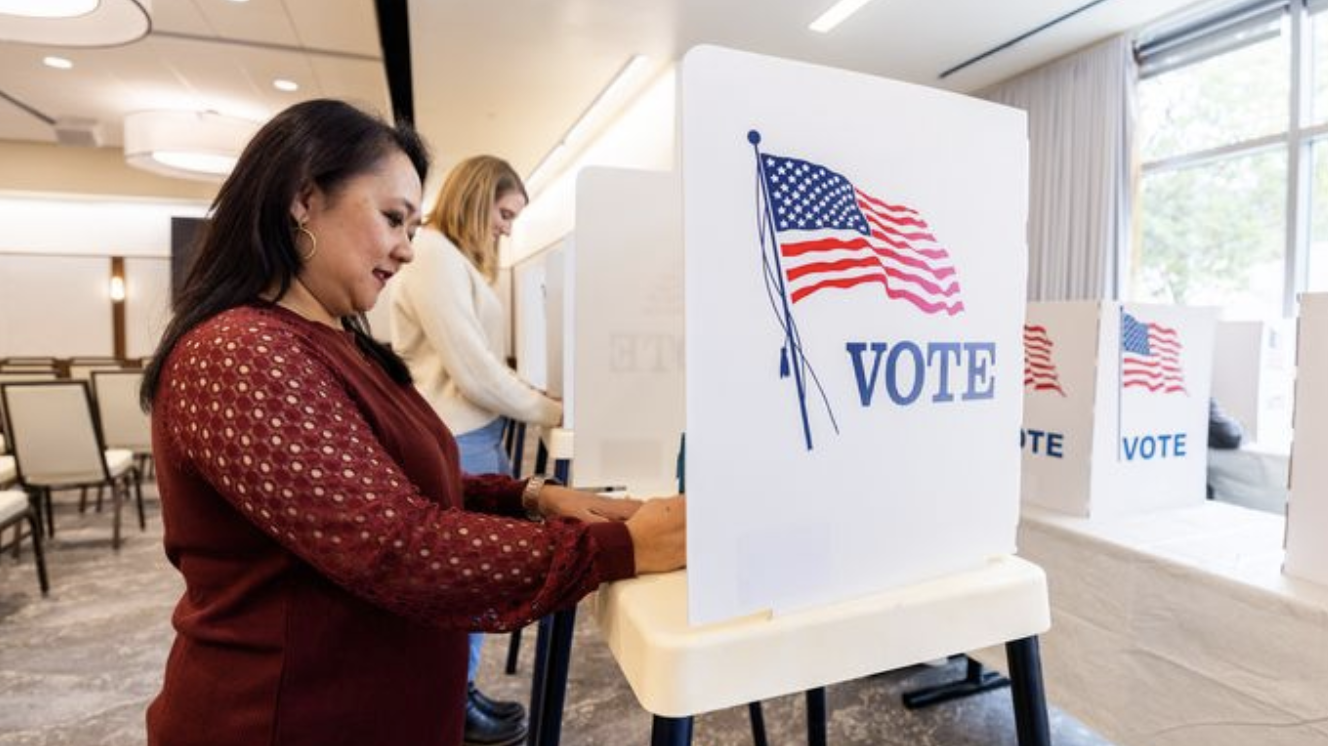
"Do not take our community for granted, or any segment of it,” said Shekar Narasimhan, chairman of the AAPI Victory Fund, warning political campaigns that Asian American and Pacific Islander voters are becoming an increasingly influential force in American elections.
With nearly 17 million Asian American and Pacific Islander (AAPI) eligible voters nationwide, community leaders say the electorate could determine the outcome of closely contested races in the 2026 midterm elections. Yet declining voter outreach funding, changing election laws, and growing economic anxiety threaten to limit participation.
During an October 16 briefing hosted by American Community Media, four experts discussed new polling data, grassroots organizing efforts, and the challenges of mobilizing AAPI voters ahead of the November 3 elections.
The speakers included Karthick Ramakrishnan, founder and director of AAPI Data; Christine Chen, executive director of APIAVote; Mary Lou Akai-Ferguson, executive director of the Asian American Power Network; and Narasimhan.
According to the latest AAPI Voter Survey, conducted through a longstanding partnership between APIAVote and AAPI Data, 90% of registered AAPI voters say they intend to participate in the 2026 midterms.
However, Ramakrishnan cautioned that intention does not necessarily translate into turnout.
Only 64% of registered voters surveyed said they were absolutely certain they would vote, a figure he described as a more realistic indicator of potential participation.
The findings nevertheless suggest that AAPI turnout could approach the record-setting levels seen during the 2018 midterms.
“Cost of living and inflation are dominant concerns,” Ramakrishnan said, noting that the findings have remained consistent across surveys conducted since 2024.
Housing, groceries, and healthcare costs were among the most frequently cited economic pressures.
Ramakrishnan also emphasized the importance of recognizing differences within AAPI communities. Although approximately 10% of Asian Americans and 17% of Pacific Islanders live below the federal poverty level, a much larger proportion report economic insecurity.
Language access remains another significant concern. According to Ramakrishnan, Asian Americans have slightly higher rates of limited English proficiency than Latino communities, making multilingual election information particularly important.
The briefing also highlighted growing concerns about immigration enforcement.
According to research presented by Ramakrishnan, 41% of Asian Americans and Pacific Islanders said they or someone they knew had begun carrying identification or immigration-related documents during the previous year.
Among South Asians, the figure rose to 53%.
Support for mass deportations has also declined. In December 2024, 38% of AAPI respondents supported deporting all people living in the country illegally. By February 2026, that figure had fallen to 29%.
Additionally, 72% of respondents said federal spending on immigration enforcement was too high.
Ramakrishnan connected the changing attitudes to widely publicized immigration enforcement operations, including actions in Los Angeles and Minneapolis.
He also noted growing dissatisfaction among some AAPI voters who had previously viewed President Donald Trump favorably, particularly concerning economic policies and tariffs.
However, he cautioned journalists against interpreting changes in election results as definitive evidence of voters switching parties, since differences in turnout can also change the overall vote share.
Despite growing political interest, organizations working to mobilize AAPI voters say they are operating with substantially fewer resources than in previous election cycles.
Mary Lou Akai-Ferguson, executive director of the Asian American Power Network, said funding for voter mobilization across the organizing ecosystem had fallen to approximately half of its 2022 levels.
Her network, composed of state-based organizations engaged in year-round political organizing, had already knocked on 450,000 doors and completed more than 85,000 phone conversations with Asian American voters as of October 15.
Yet funding reductions have forced organizations to eliminate programs designed to reach younger and less consistent voters.
In Georgia, community organizations previously hosted gatherings called “Chai and Chat,” where residents could ask questions about government, elections, and local political issues in informal settings.
The program helped explain how seemingly unfamiliar elections, such as races for the Georgia Public Service Commission, could affect everyday expenses like utility bills.
However, Akai-Ferguson said funding shortages prevented organizations from conducting similar early outreach this year.
“It's not enough to just show up to communities in October,” she said.
In Nevada, the network also had to abandon plans to hire Korean American and Chinese American community organizers who would have developed deeper relationships with voters.
Programs involving local social media influencers, particularly those intended to reach younger audiences, were similarly reduced.
Akai-Ferguson argued that these cuts could have consequences at the ballot box, even as public interest in the elections remains high.
The growing electoral influence of AAPI communities is particularly visible in battleground states.
In Michigan, Akai-Ferguson reported that approximately 26,000 Asian American voters had already cast early ballots by October 15, thousands more than at the same stage of the 2022 midterms.
She noted that closely contested statewide elections can be decided by margins comparable to the number of AAPI voters participating.
Narasimhan highlighted Alaska as another state where relatively small changes in turnout could influence election results.
He estimated that approximately 56,000 Asian American, Native Hawaiian, and Pacific Islander voters live in Alaska, with significant Filipino American communities in Kodiak and Ketchikan.
His organization has been working to increase participation among voters who have historically been less engaged in electoral politics.
Narasimhan also described organizing efforts in Michigan involving Rising Voices and other local groups, including events tailored to Asian American women and collaborations with digital creators.
He said political campaigns have become more attentive to AAPI voters over the past decade, increasingly hiring community outreach staff and developing multilingual engagement strategies.
However, he emphasized that the electorate is far from politically uniform.
AAPI communities represent many ethnicities, languages, immigration histories, and political perspectives, and campaigns must avoid treating them as a single voting bloc.
Christine Chen, executive director of APIAVote, warned that changes to election procedures in several states could create new barriers for voters.
She cited stricter identification requirements, limitations on mail voting, reduced polling locations, and changes to early voting opportunities.
In Indiana, for example, student identification cards are no longer accepted as qualifying voter identification, creating challenges for college students who may not have alternative documents readily available.
Chen also pointed to Tarrant County, Texas, where she said the number of polling locations had been reduced from 316 during the 2022 midterms to 224 in 2026.
According to Chen, the reduction could affect approximately one million registered voters, including more than 75,000 AAPI voters.
She also raised concerns about the federal SAVE database being used to check voter eligibility, warning that inaccuracies could create problems for naturalized citizens.
Chen urged voters to verify their registration status before Election Day and familiarize themselves with their rights, including the availability of provisional ballots when eligibility cannot immediately be confirmed at a polling place.
To address these challenges, APIAVote and its partners had mailed translated voting information to approximately 1.2 million households across 19 states, in 11 languages.
The organization also operates a multilingual voter assistance hotline at 1-888-API-VOTE.
The panelists expressed concern about political disengagement among younger AAPI voters, particularly members of Generation Z.
Akai-Ferguson said many young people are motivated by dissatisfaction with current policies rather than enthusiasm for particular candidates.
Economic pressures, including housing costs, transportation expenses, and reductions in educational funding, have contributed to frustration.
She argued that successful youth outreach requires meaningful opportunities for participation rather than last-minute advertising campaigns.
Narasimhan similarly emphasized that younger voters respond to candidates they perceive as authentic and capable of addressing their concerns.
Chen suggested that families and older generations can also play an important role in encouraging participation.
She recalled that voting became a family tradition when her relatives took her to the polls after she turned 18.
“One phone call could be the difference between someone staying home and casting their ballot,” Chen said.
As Election Day approached, speakers stressed that community organizations and ethnic media outlets have an important role in providing accurate, accessible voting information.
Ramakrishnan encouraged journalists to repeat essential election information throughout the voting period, noting that busy families may need multiple reminders before taking action.
Akai-Ferguson also warned that misinformation could intensify after November 3, particularly as ballots continue to be counted and election results are contested.
Ramakrishnan echoed those concerns, noting that lengthy vote-counting procedures in states such as California are established parts of the election process but can be misrepresented as evidence of wrongdoing.
The speakers agreed that AAPI voters are becoming increasingly important in American elections, but meaningful political participation requires more than population growth.
It depends on sustained community engagement, accessible voting procedures, accurate information, and investment in the organizations that connect voters with the democratic process.


